

10 hours agoAuthor: Aditi Ojha
- copy link
As As the date of periods comes closer, an untold fear begins to settle in the heart. There should be no heavy bleeding again, no need to suffer the same unbearable pain again. For many women, this is not just a date, but becomes a worry that returns every month.
Often these problems are considered ‘normal’. But it is not normal for this to happen every time. In many cases, this is due to uterine fibroids. Actually, when small lumps form on the walls of the uterus, they are called uterine fibroids.
Due to changing lifestyle, obesity and hormonal imbalance, cases of uterine fibroids are increasing in women. According to research in the Journal of Contemporary Clinical Practice (JCCP), around 7-8 out of every 10 women worldwide may have fibroids by the age of 50. This means that by this age most women may develop fibroids at some time or the other.
So today we physical health I will know that-
- What are uterine fibroids?
- What are their symptoms and causes?
- When is it necessary to see a doctor?
Expert: Dr. Geeta Jain, HOD, Obstetrics, Gynecology & IVF, Macure Hospital, Delhi
Question- What are fibroids?
answer- Fibroids are non-cancerous lumps that form in or around the uterus. These are made of muscles and fibrous tissue. These are called uterine myoma or leiomyoma. The size of fibroids can vary. Some fibroids are as small as a pea. But some become so big that swelling or bulge in the stomach becomes clearly visible.
Question- How are fibroids formed?
answer- The exact reason for the formation of fibroids is not completely clear yet, but doctors believe that there are some important reasons. Understand from graphic-
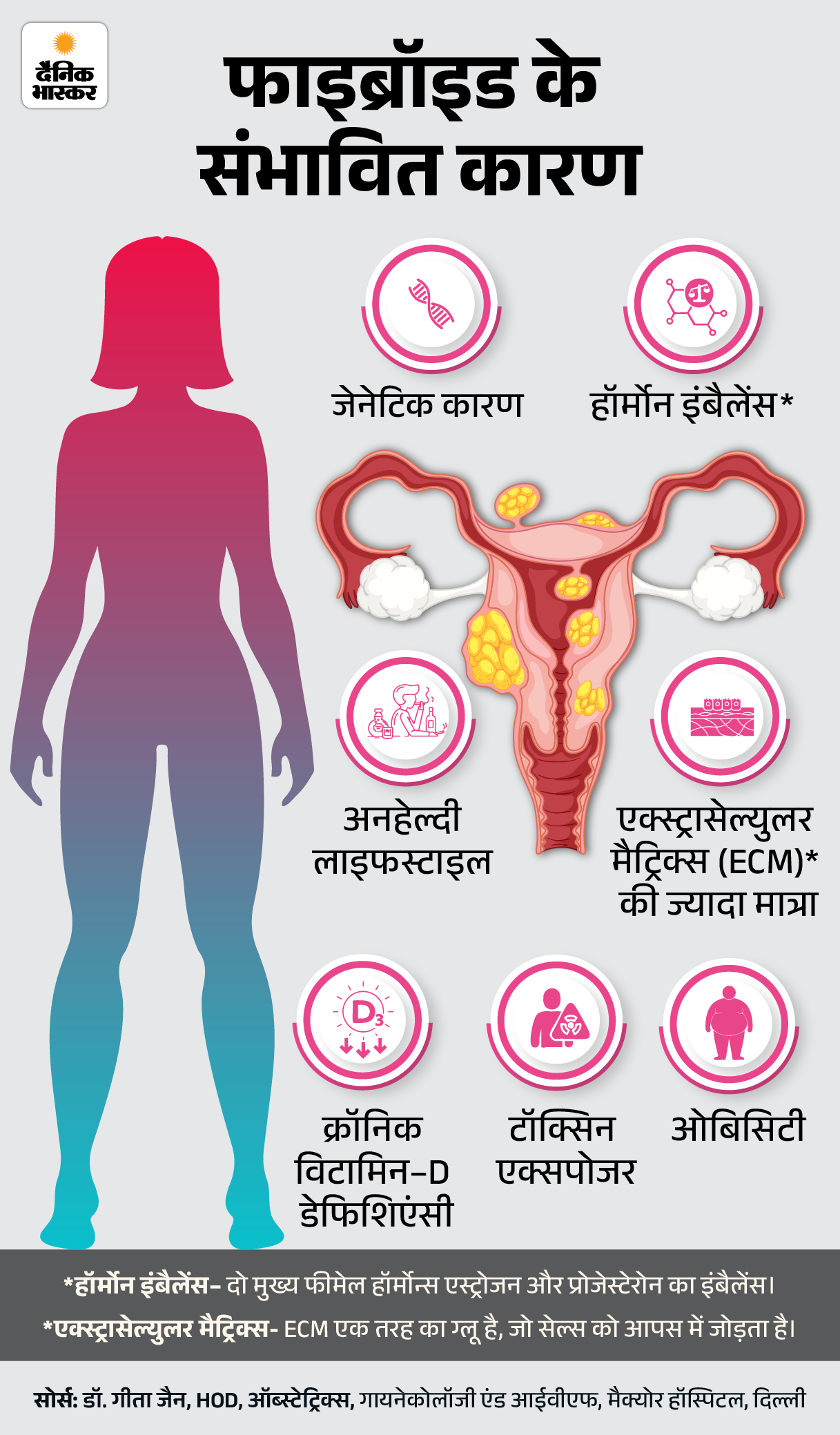
Estrogen and progesterone hormones promote the growth of fibroids. This is the reason that after menopause (menopause is the time when periods stop coming and the process of pregnancy in the body stops) when the hormone levels fall, sometimes the fibroids themselves become smaller. Fibroids grow at different rates in every woman. Some fibroids grow slowly, some rapidly and some remain the same size for a long time.
Question: How many types of fibroids are there?
answer- Fibroids are divided into four main types based on their location.
Intramural Fibroids: These are inside the muscle wall of the uterus and are the most common type.
Submucosal Fibroids: These grow just below the innermost layer of the uterus. This is the layer which is responsible for periods.
Subserosal Fibroid: These form on the outer surface of the uterus and grow outward. If these grow larger, inflammation or a bulge may appear in the lower abdomen and may put pressure on the urinary bladder or intestines.
Pedunculated Fibroid: These are found less. These are attached to the wall of the uterus through a thin joint (called a pedicle).
Question- What are the symptoms of fibroids?
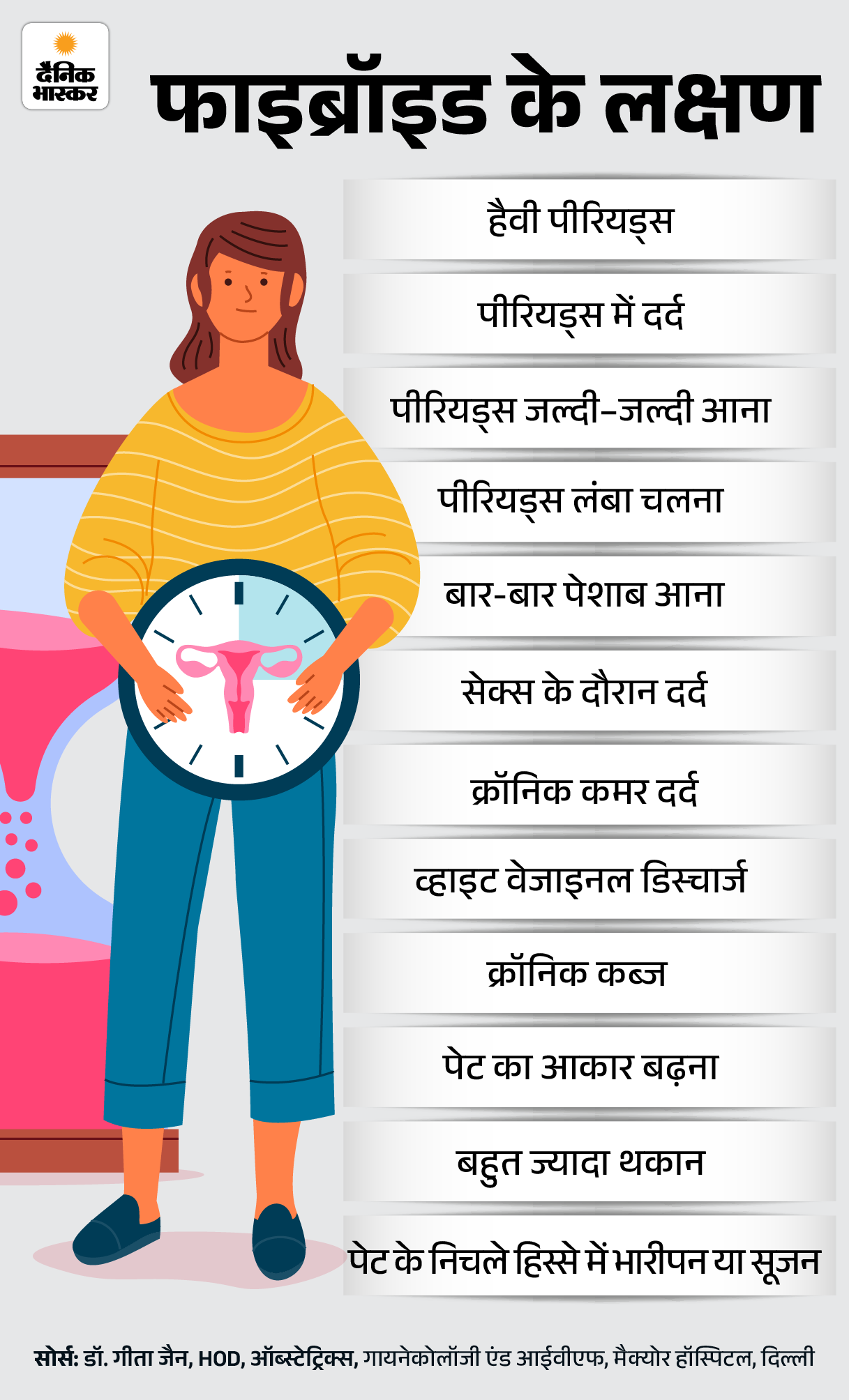
answer- Symptoms of fibroids are not the same in every woman. Many times they grow slowly and no special problem is felt in the beginning. But as the size of fibroids increases, the body starts giving its signals. Understand some common symptoms of fibroids from the graphic below-
Question- When should one see a doctor?
answer- If pelvic pain (pain in the lower abdomen) persists, periods are heavy or painful, periods are frequent or you feel persistent weakness, then it is important to consult a doctor. If there is sudden excessive bleeding or severe pelvic pain, seek medical help immediately.
Question- What are the risk factors of fibroids?
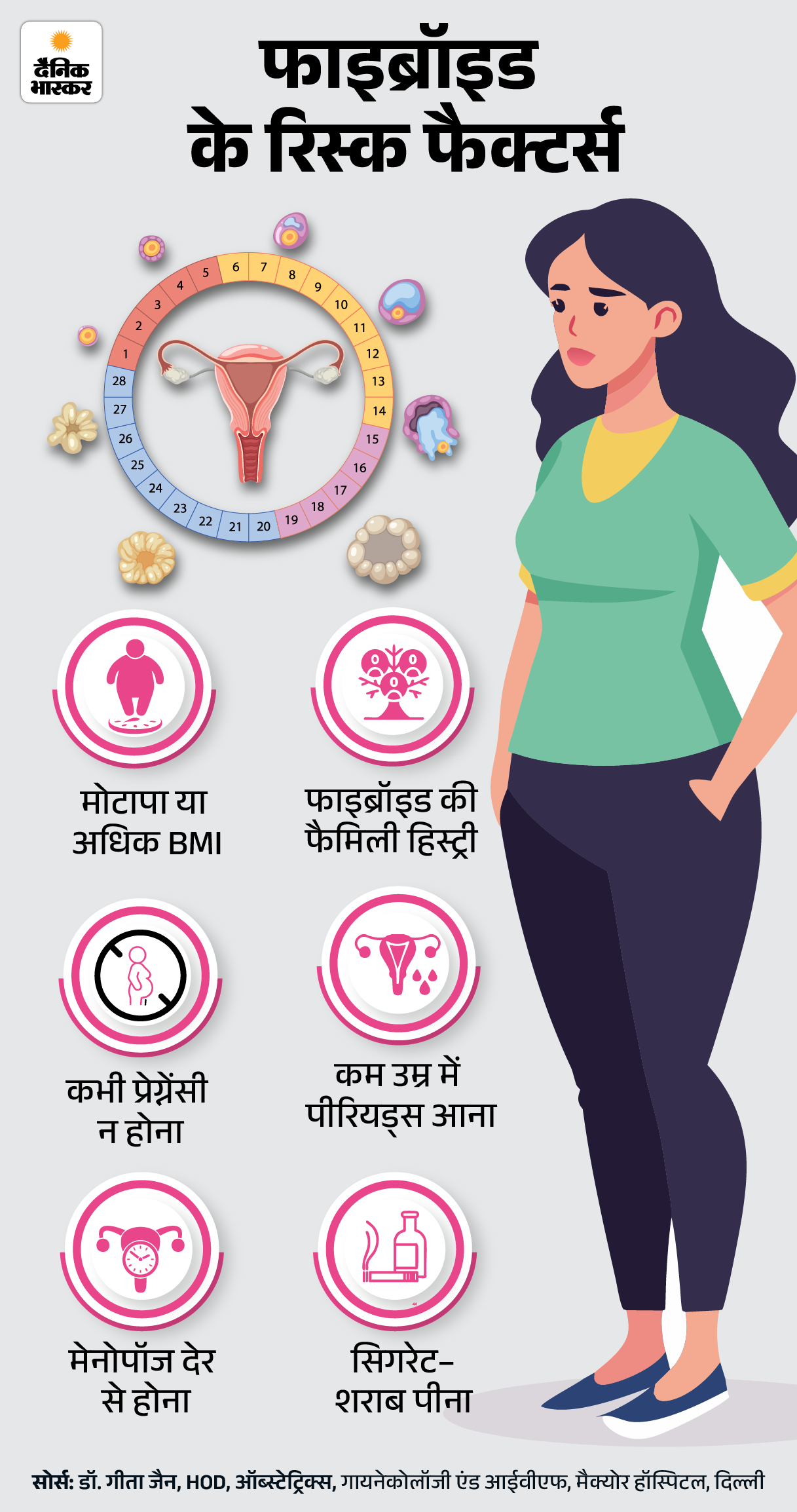
answer- The risk of getting fibroids increases in some conditions. These conditions are related to hormonal balance and lifestyle. If a woman has these risk factors given in the graphic, then she may be at risk of developing uterine fibroids.
Question: How is uterine fibroid treated?
answer- Treatment depends on the size, number, location and symptoms of fibroids. For small, asymptomatic fibroids, only regular checkups are often recommended. If necessary, the option of medicines, hormonal therapy or surgery is adopted.
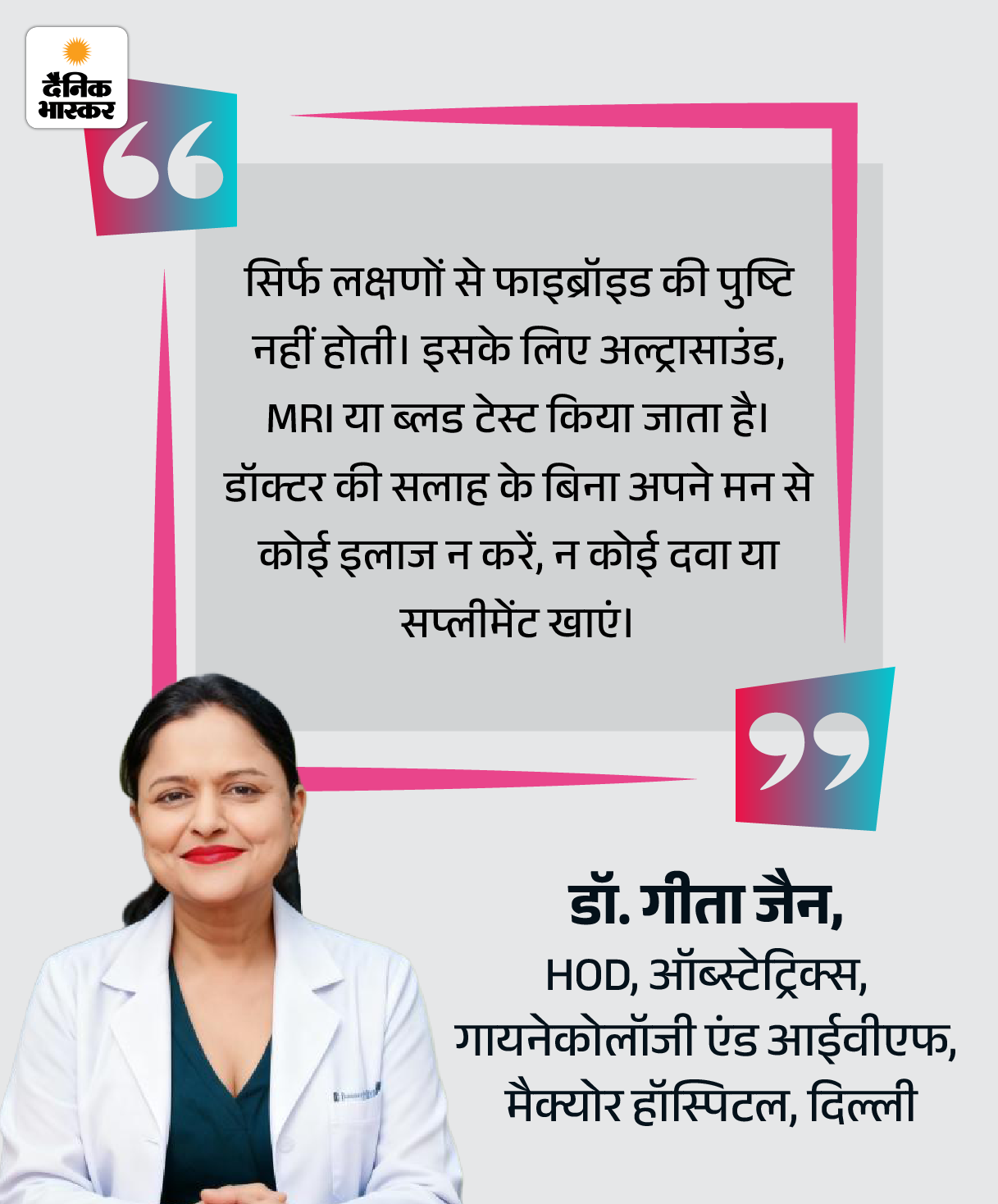
Question- Are fibroids always clearly visible in ultrasound?
answer- In most cases, fibroids are visible on a simple ultrasound. But sometimes their size is very small or their location is such that they are not clearly visible. In such cases, the doctor may recommend tests like transvaginal ultrasound or MRI.
Question- How can the risk of fibroids be reduced?
answer- To reduce the risk of fibroids, it is important to pay attention to lifestyle and diet. Read the points given in the graphic below carefully and include it in your everyday life.

Green vegetables and whole grains contain fiber, which helps in hormonal balance. Berries and turmeric have anti-inflammatory properties. Flaxseed and healthy fats support the overall health of the body.
Some common questions and answers related to fibroids
Question- Can fibroids cause anemia? answer- Yes, frequent or excessive periods can cause anemia. If symptoms of anemia appear along with fibroids, talk to a doctor immediately.
Question: Are fibroids cancerous? answer- No, in most cases they are non-cancerous.
Question: Can fibroids be cured by medicines? answer- Medicines do not completely eliminate fibroids, but they can help control their symptoms and slow their growth.
Question: Can fibroids recur? answer- Yes, in some cases new fibroids may form even after treatment. Therefore regular follow-up is necessary.
Uterine fibroids can be managed better with timely diagnosis, balanced lifestyle and doctor’s advice.
……………………………….
Read this news also…
Physical Health- Do you get fever during periods: Know from the doctor what is period flu, who is at greater risk, how to prevent it

Period cycle is a very uncomfortable experience. It is especially more uncomfortable for those women whose menstrual cycle is irregular. For women who get period flu every month, this experience can be even more painful. In this, one has to face flu like symptoms every time during periods. Read the full news…


&w=360&resize=360,240&ssl=1 "Steel sprinkle in steel vessels, yogurt and prevalence will work for protection this domestic tips")
