

Last Updated:
The tomb revealed a number of other surprising artefacts, suggesting that the woman may have belonged to a royal family. This archeological excavation began when plans were made to build a solar park.
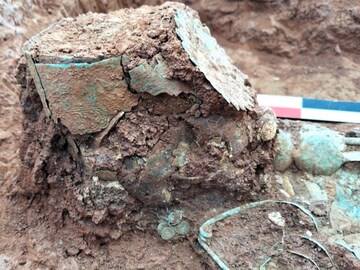
History has always been full of mysteries. Often, buried civilizations surprise us, and their remains reveal insights into the society, traditions and power balance of the time. Today, we are telling you about one such historic discovery, which came to light during the excavation. A team of archaeologists in Greece discovered the 2,700-year-old skeleton of a woman wearing a strange and unusual upside-down crown. In addition, several other surprising artefacts were revealed from the tomb, suggesting that the woman may have belonged to a royal family. This archeological excavation began when plans were made to build a solar park. After this, local authorities ordered a thorough investigation and excavation to preserve any artefacts.
Excavations by archaeologists revealed that other tombs at the site date back to the ancient era, around 700 BC. The skeleton they found, known as the “burial of a woman with an inverted diadem,” was 20 to 30 years old. The Greek Ministry of Culture and Greek archaeologists jointly excavated the site, aiming not only to uncover the meaning behind the artefacts, but also to preserve them for future generations. A spokesperson for the team explained the discovery, saying, “An impressive bronze-banded royal crown was ceremonially placed on his head as a symbol of his nobility and status. At the center of the crown was a large ‘sun-shaped’ figure carved on his forehead.”
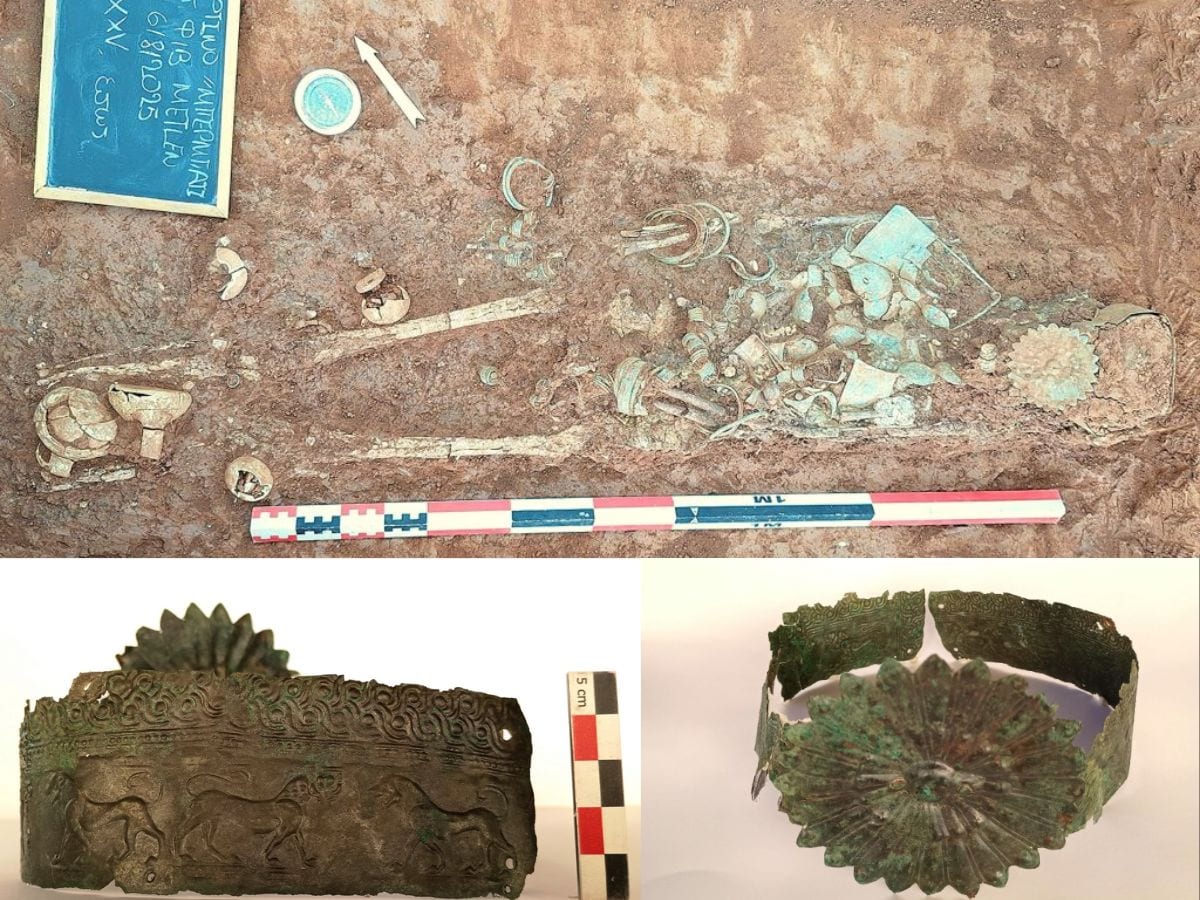
The spokesperson further explained that the crown is adorned with a pair of lions and lionesses facing forward, which are considered symbols of royal power and authority. In short, the crown carries symbols of power and authority from the 7th century BC, but it was placed upside down on his head, giving the discovery a mysterious twist. Archaeologists have speculated that the inverted position of the crown may symbolize the fall of a ruler. This means that women may have lost their position of power during the turbulent period of the 7th century BC. Many luxury items were found in the area surrounding the woman’s burial, including copper earrings, bone and ivory beads, amulets and several bronze offerings.
Archaeologists speculate that the woman’s position and burial method reflect the changing social conditions of the mid-7th century BC. At the time, the hereditary monarchy was declining in popularity, and an aristocracy was gaining currency. The objects found with him indicate a high social status. “In the same group of graves, a little girl of about four years, wearing a bronze crown, was also found,” the spokesman said. This tomb, which also dates back to ancient times, had ornaments similar to that of the noble lady. It indicates a family or kinship relationship between the two. The cemetery in which this excavation took place is organized into different groups, including crematoriums and tombs.
December 08, 2025 11:06 AM IST
2700 year old grave found in excavation, woman wearing crown came out from inside, shocking truth came out
&w=360&resize=360,240&ssl=1 "Donald Trump has issued a strict warning to India, problems may increase…")
&w=360&resize=360,240&ssl=1 "What is the relationship with Sunita Williams? Learn everything about their family, education and career")
