

10 hours agoAuthor: Shivakant Shukla
- copy link
name of the book: Geeta for youth
(Hindi translation of ‘Gita for the Young and the Urban’)
Author: Nityananda Charan Das
Publisher: penguin
Translation: MA. Sameer
Price: Rs 399
In today’s busy life, every person is troubled and tired at some point or the other. The habit of overthinking, chasing goals and being constantly busy has taken away the peace of mind of people. Many times a question arises in the heart, is this really life?
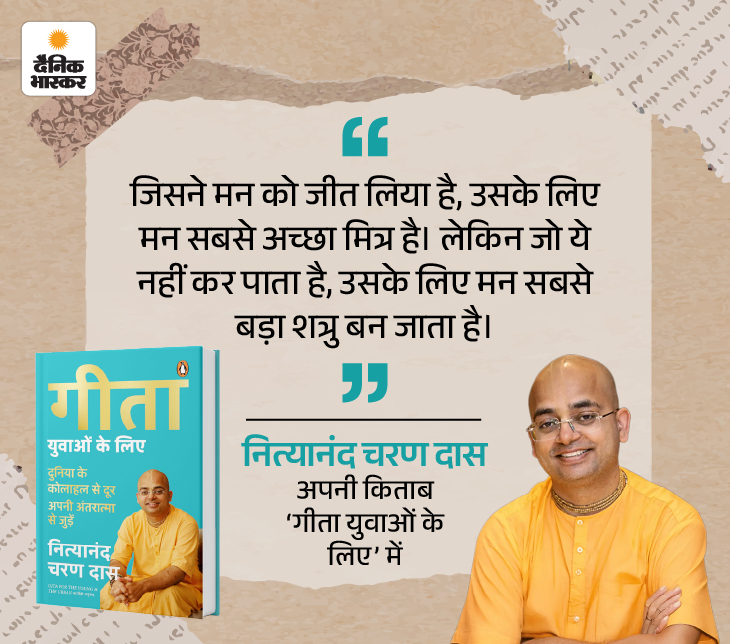
In such a situation, Nityanand Charan Das’s book ‘Gita for the Youth’ shows a comforting path. This book presents the deep wisdom of Bhagavad Gita in a simple and relevant manner by connecting it with today’s reality of city glare, traffic jams and midnight scrolling.
Nityananda Charan Das is a renowned spiritual guide and monk of ISKCON. He is associated with Shri Radha Gopinath Temple, Mumbai. Nityananda guides youth to live a simple, purposeful life. He has written many books till now. These include ‘A Monk’s Almanac’ and ‘Icons of Grace’, which present ancient Vedic knowledge in a modern context. Nityananda has written Bhagavad Gita in his book ‘Gita for Youth’ in such a simple and practical way that every person can implement it in his life.
Purpose and importance of the book
This book presents Geeta as a bridge between the hustle and bustle of the city and peace of mind. The aim of the book is to give the youth a practical guide to understand themselves in this overwhelming world, keep their mind calm and think in the right direction.
Nityanand ji explains deep concepts like religion, karma and dedication through stories in such a simple way that they directly connect with our everyday life. The graphic below can explain the 8 key lessons of the book in a more simple way.
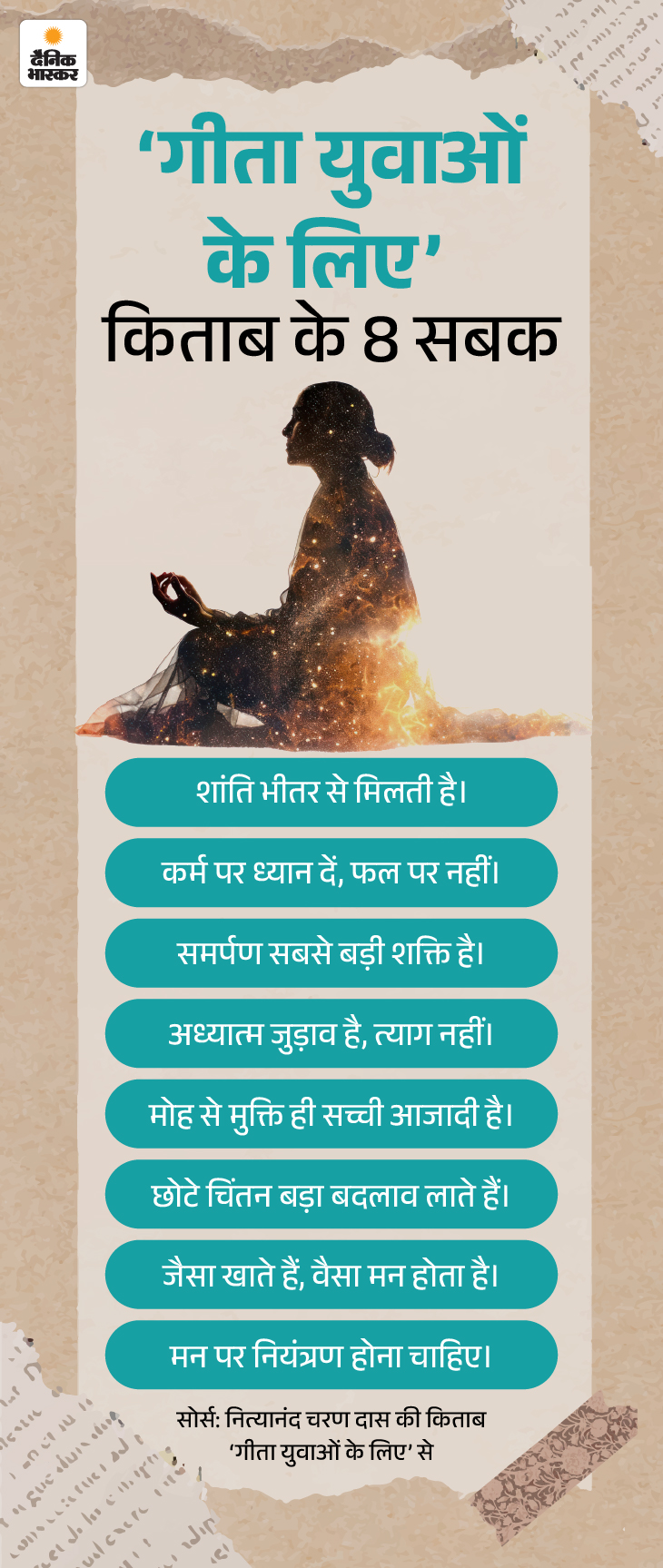
The book is based on four main themes. Let us understand these in detail.
Modern life and search for peace
In the book, Nityanand ji tells that in the busy life of the city, things like mobile notifications, work pressure and constant comparison keep distracting us every moment. But we keep looking for peace outside. Geeta teaches us that unless the mind is calm, no external comfort can give us peace.
This book leads us towards inner practice. That means understanding your thoughts, controlling your desires, not worrying about the results while doing work and maintaining balance in every situation. This practice gradually makes us stable, strong and calm from within.
Karma and Purpose: Action Without Attachment
In the book, Karma Yoga has been described as the basic basis of life. Nityananda ji explains that our job is to perform our duty with full honesty, but not to worry excessively about its consequences.
This chapter teaches that when we act without the burden of fear, pressure and expectations, our mind remains light. This increases focus and the quality of work also improves. This is action without attachments. That means making efforts, but keeping the mind completely calm and free.
mind control
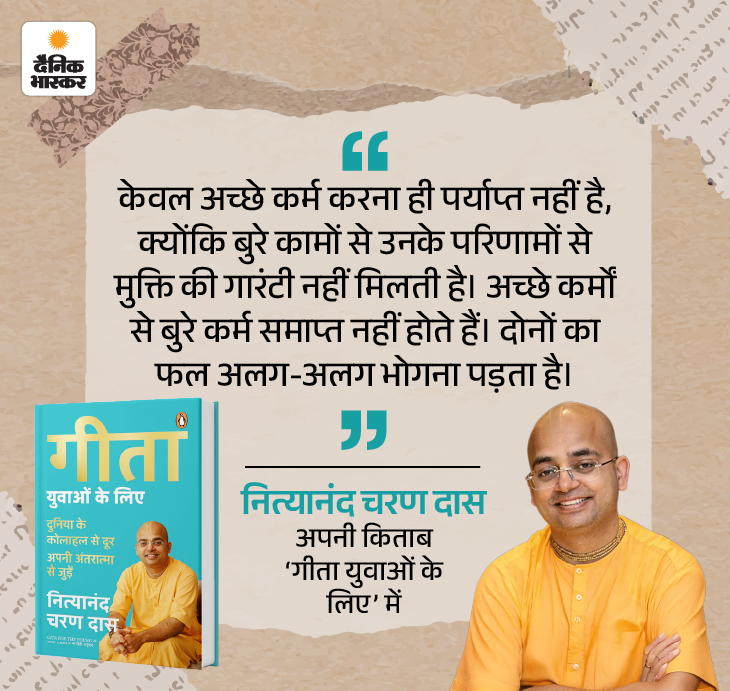
In this chapter, Nityananda ji says, there is a journey of the soul between our first breath and our last breath. The biggest challenge of this journey is to understand the mind and gain control over it. He explains that if the mind remains bound by attachment, it leads us to restlessness and sorrow, whereas renunciation frees us from within.
Nityanand ji explains through stories that the job of a Guru is to take the soul towards heights. When we surrender ourselves to God and right guidance, our mind becomes calm and our perspective on life starts changing.
Social engagement and dedication
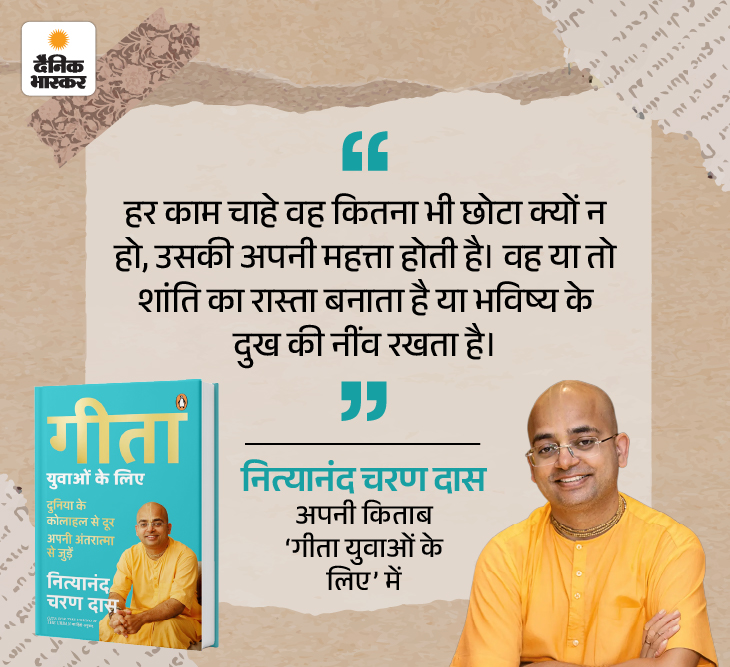
The final part of the book focuses on the spirit of service and connection. Nityananda Ji says, “Spiritual life is not rejection, it is connection.” They teach the youth that even if there is loneliness in city life, a person becomes strong from within only by connecting with others.
This chapter explains that when we approach our struggles as a spiritual practice instead of considering them a burden, it becomes easier. Nityananda ji explains that when we cling to things, we get tied up in attachment. When we learn to let go, we become free. This is the real meaning of salvation.
Why should you read this book?
If you feel lost in the busy life of cities then this book is for you. Apart from this, this book can prove helpful for some other people also.
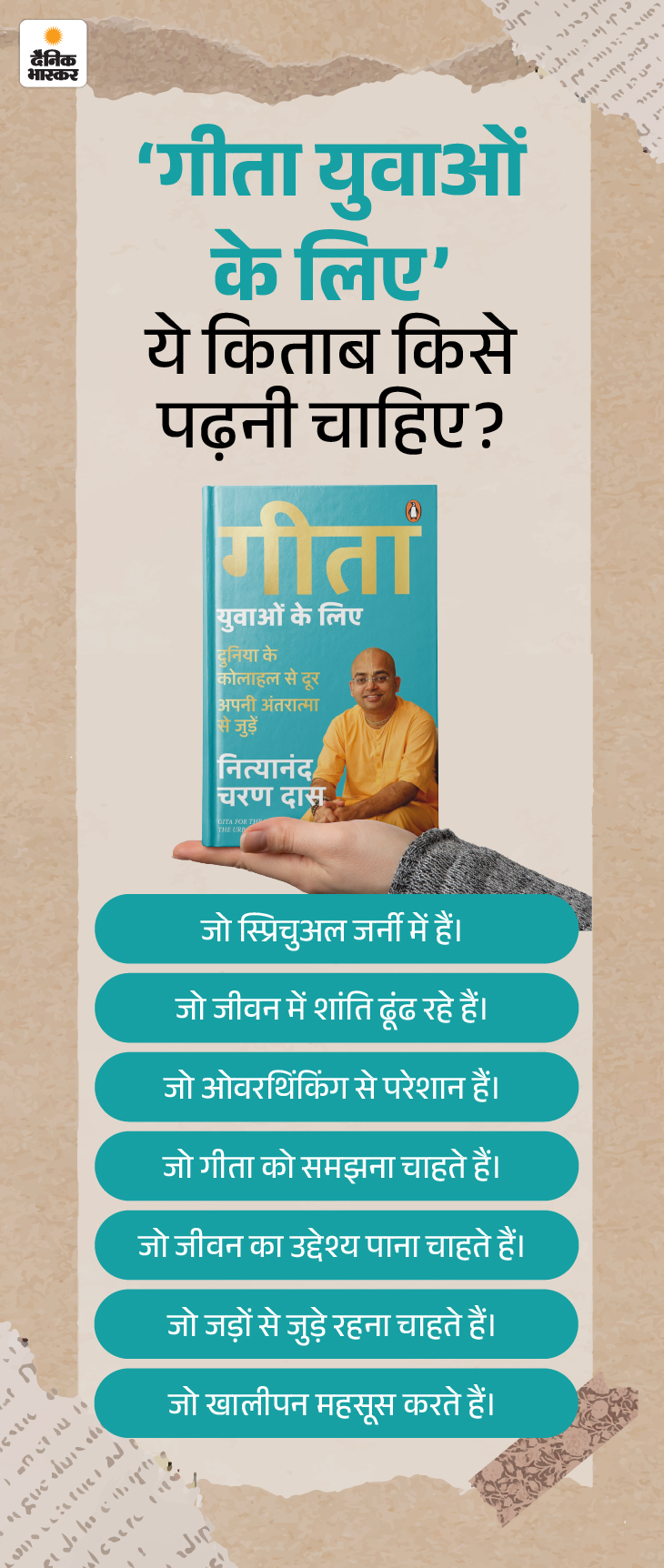
My opinion about the book
‘Gita for Youth’ is not a heavy philosophical treatise, but a guide to modern life. Nityanand ji’s style of storytelling is so beautiful that even those reading Geeta for the first time feel connected. It seems repetitive at some places, but the message is so motivating that there is no boredom. While reading this, I felt as if a mentor was talking to me.
Nityananda ji reminds us that the soul’s journey is ongoing from the first breath to the last, just tune in. If you are looking for peace in the glare of the city, then read this book today. This book will definitely bring some changes within you and take you towards a better life.
…………….
Also read this book review
Book Review- Four efforts necessary for success: Modern interpretation of Dharma, Artha, Kama, Moksha, if you want to understand Indian philosophy then read this book.
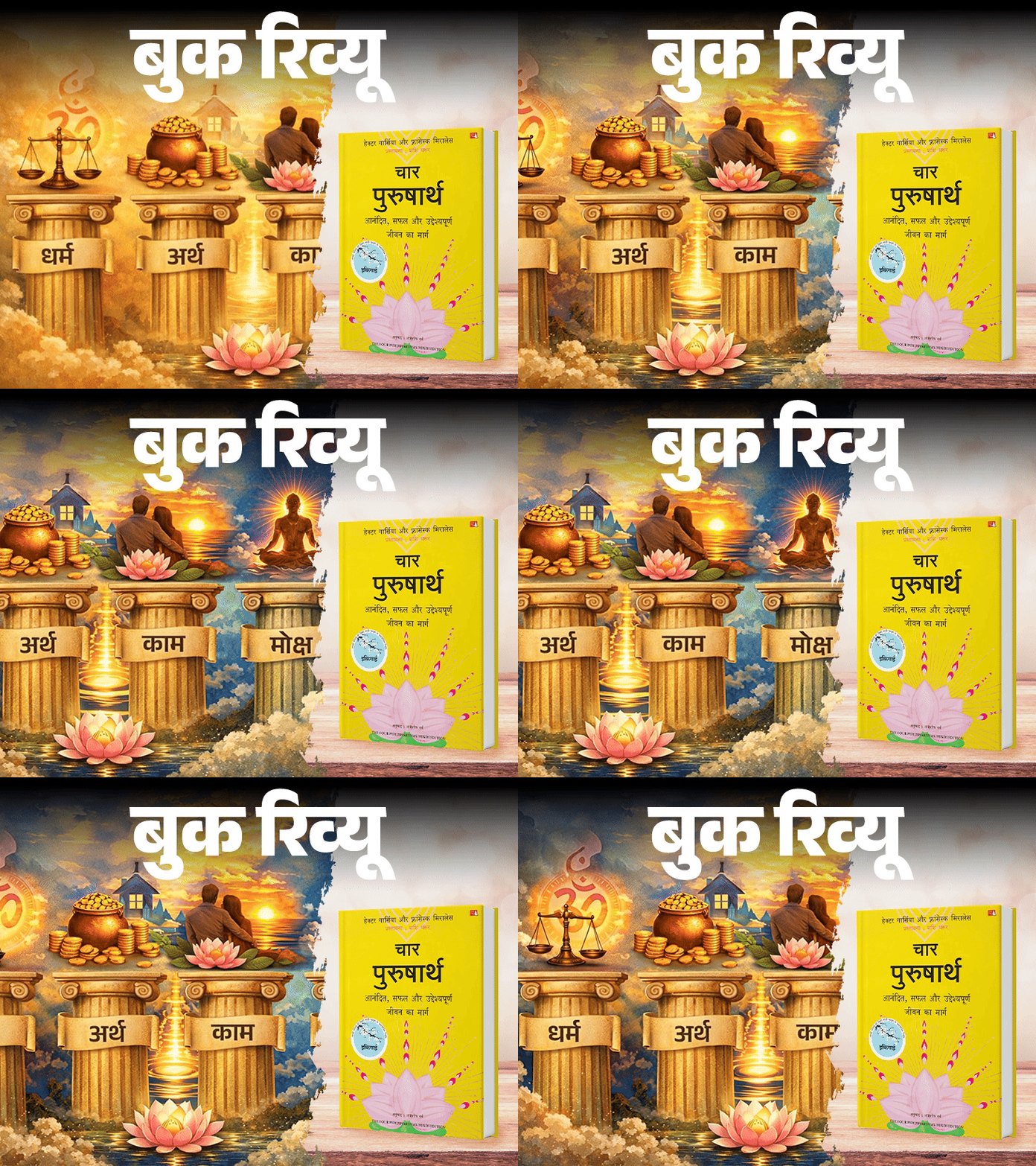
Authors Hector Garcia and Francesc Miralles, who told people around the world the secret of a long and happy life through the book ‘Ikigai’, have now turned to the ancient times of India. His new book ‘Char Purushartha’ is based on the four goals of Hindu philosophy, which are considered the basis of every human being’s life – Dharma, Artha, Kama and Moksha. Read the full news…
-
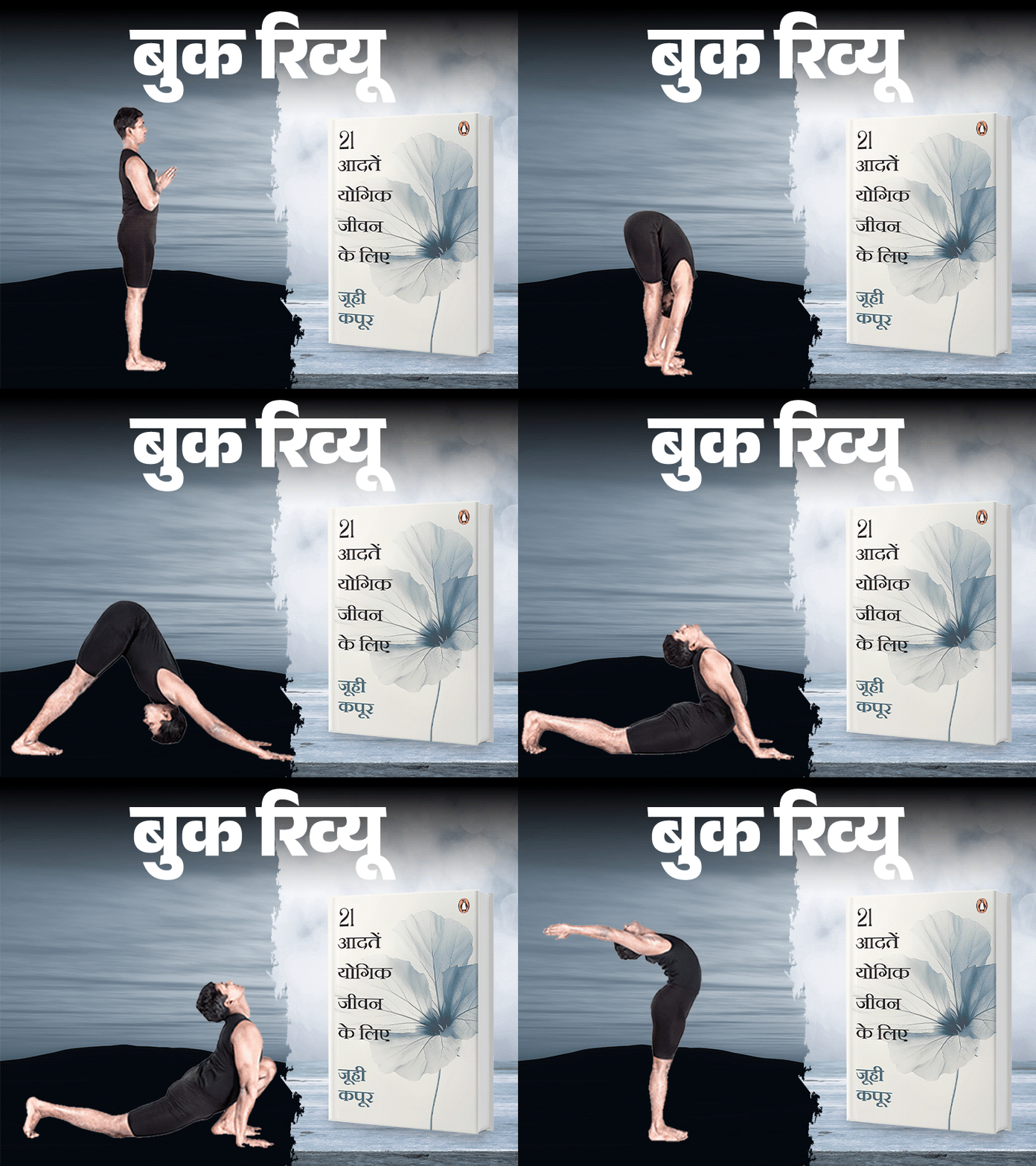
Book Review- 21 Habits for a Healthy, Beautiful Life: If you are tired of today’s stressful and hectic life, then definitely read this book.
- copy link
share
-
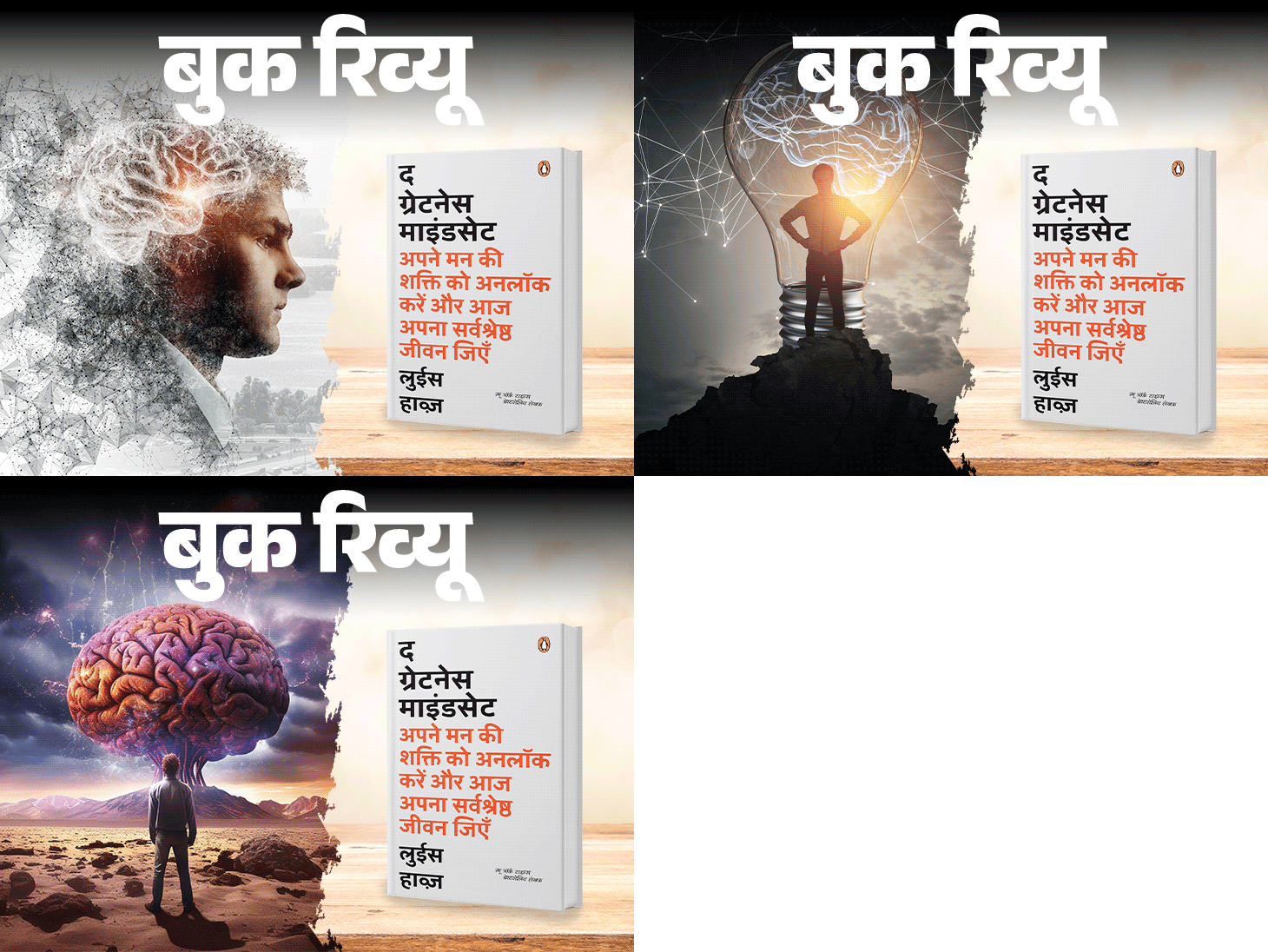
Book Review: Strength is not outside, but within: Every day is a new opportunity to learn something, win, be humble, unlock the power of your mind
- copy link
share
-
Book Review- Five Most Precious Treasures of Life: Money, Relationship, Health, Mind and Financial Freedom, How to protect and grow this wealth
- copy link
share
-
Book Review- From Feeling to Healing: Whatever you feel, do not suppress it, understand it and give it the right direction, this is what the book ‘Feel to Heal’ teaches.
- copy link
share

&w=360&resize=360,240&ssl=1 "Know what people should eat when bitten by a poisonous snake? The effect of the poison will be reduced soon")
