

11 hours agoAuthor: Gaurav Tiwari
- copy link
In summer, people like to enjoy in swimming pools and water parks. But do you know that this fun can also become a danger to our eyes.
In fact, sometimes chlorine, chemicals and bacteria present in pool water can damage the sensitive layer of the eyes. This can cause problems like burning, redness, itching and blurriness.
The risk of infection increases especially in crowded pools. In such a situation, it is important not to ignore eye safety while enjoying swimming.
so ‘News of need’ I will talk about the risk of eye infection caused by swimming pools. You will also learn that-
- Which people are at greater risk?
- When is it necessary to consult a doctor?
Expert: Dr. Shreya Gupta, Consultant, Ophthalmology, Shri Balaji Action Medical Institute, Delhi
Dr. Rohit Sharma, Consultant, Internal Medicine, Apollo Spectra Hospital, Jaipur
Question- People go to swimming pools and water parks more in summer. Can swimming pools increase the risk of eye infections?
answer- Yes, in summer the sensitivity of the eyes increases due to excessive sweat, dust and crowd.
- If swimming pool water is not cleaned properly, bacteria and viruses can grow in it.
- These bacteria can cause inflammation in the outer layer of the eye (conjunctiva).
- Due to this, symptoms like burning, redness, itching and watering of eyes may appear.
- There is a higher risk of infection spreading in a dirty or overcrowded pool.
- This risk further increases by swimming while wearing contact lenses.
Question- Why does swimming pool water harm the eyes?
answer- The chemicals and bacteria present in it harm the eyes. Understand in detail-
chlorine- Chlorine is added to swimming pools to disinfect water, but it can break the natural protection layer of the eyes. This may cause dryness, irritation and temporary blurring of the eyes.
Other chemicals- Chemicals that balance the pH of water (so that the water is neither acidic or basic) can irritate the cornea. Excessive exposure to such chemicals causes irritation in the eyes.
bacteria- Swimming pools that are poorly maintained may contain bacteria, fungus or protozoa. These infect the eyes and cause swelling. Prolonged exposure may increase the risk of infection or allergic reaction.
Question: Why is there a higher risk of infection when bathing in a water park?
answer- Many people bathe together in the water park, due to which bacteria and viruses spread rapidly. If water is not filtered properly, dirt and bacteria accumulate. If water is not disinfected, the risk of infection increases. They can enter the body through open wounds, eyes, ears or skin.

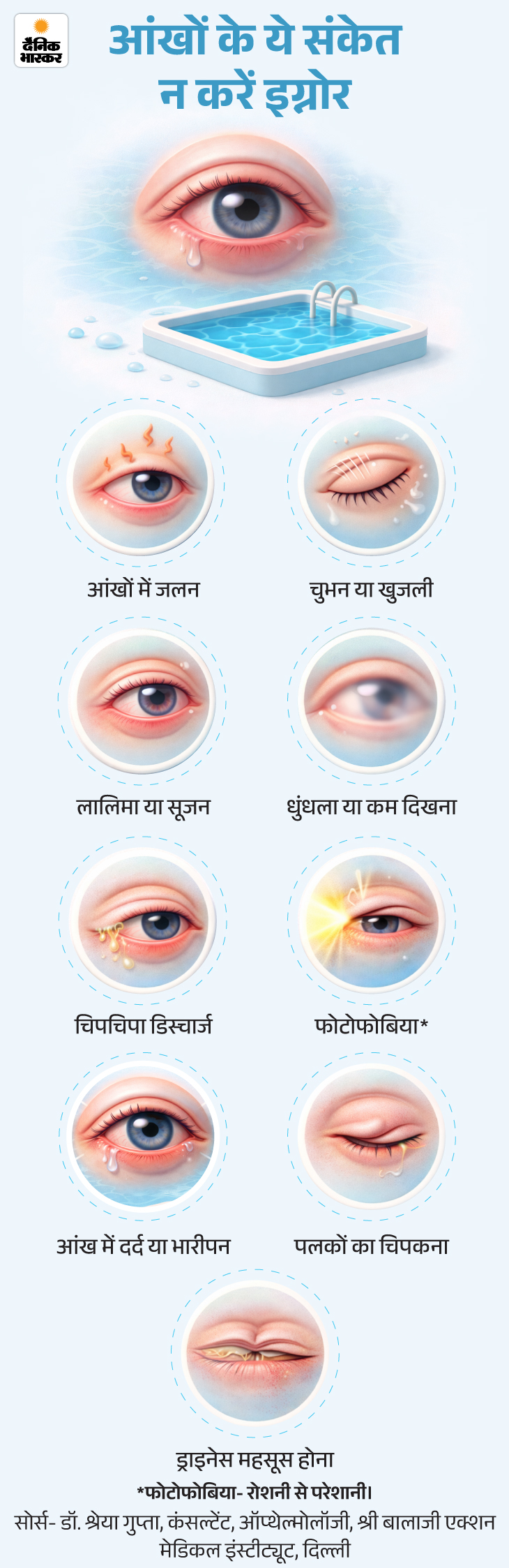
Question- How to recognize that swimming pool exposure is having adverse effects on the eyes? Which signs should not be ignored?
answer- Chlorine, chemicals and bacteria present in swimming pool water can irritate the outer layer of the eyes (conjunctiva and cornea). Therefore, do not ignore the signs given in the graphic-
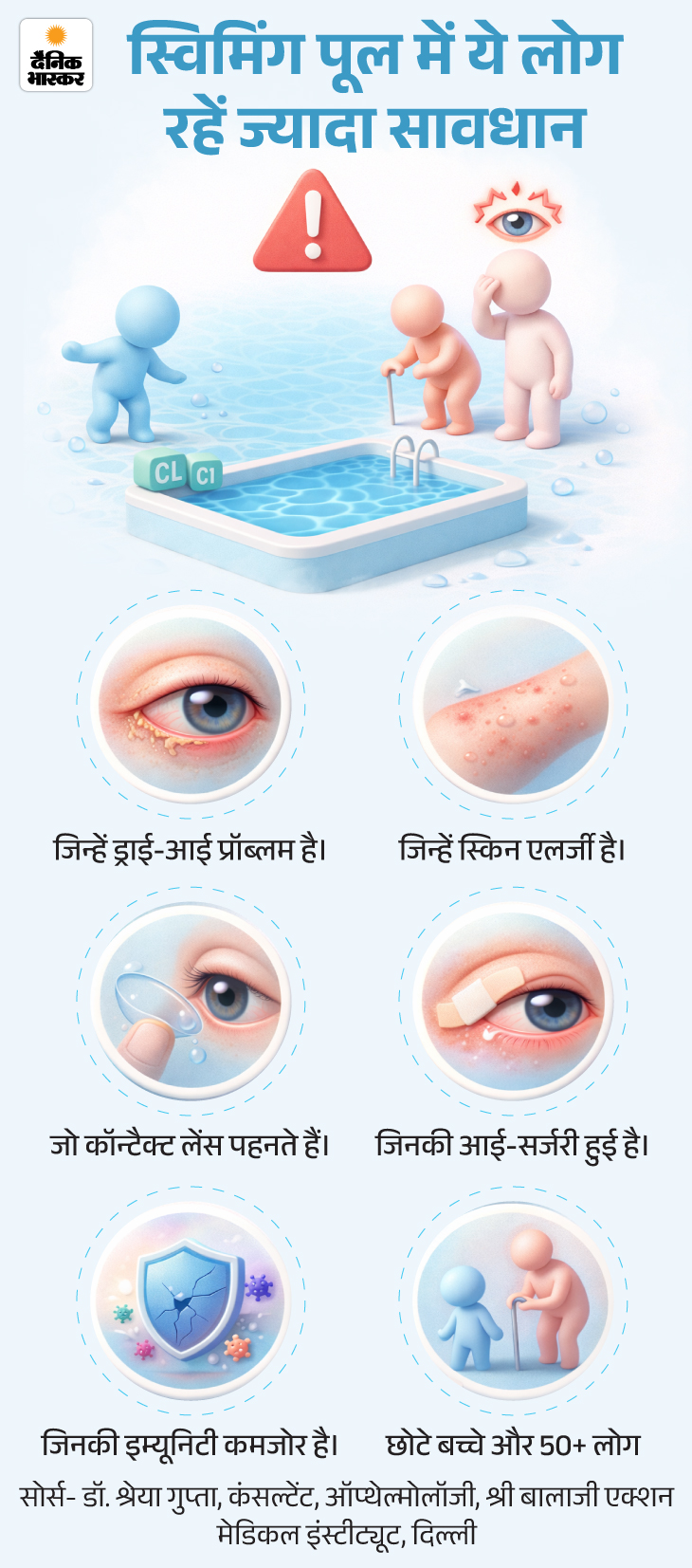
Question- Some people’s eyes are more sensitive. Who should be more careful in swimming pools?
answer- Actually, bathing in swimming pool for a long time is harmful for everyone. But those whose eyes are more sensitive, this risk is higher. See the graphic below to see which people are more at risk:
Question: Can swimming while wearing contact lenses increase the risk of infection?
answer- Swimming while wearing contact lenses can increase the risk of eye infection.
- Bacteria, viruses, or amoebas present in pool water can stick to the lenses.
- The lens traps microbes between the eye and the water, which can cause infection to spread rapidly.
- Chlorine and other chemicals increase irritation in the eyes by damaging the surface of the lens.
- This may cause risk of conjunctivitis or corneal infection.
- Therefore, it is a safe option to remove lenses or wear water-tight swimming goggles before swimming.
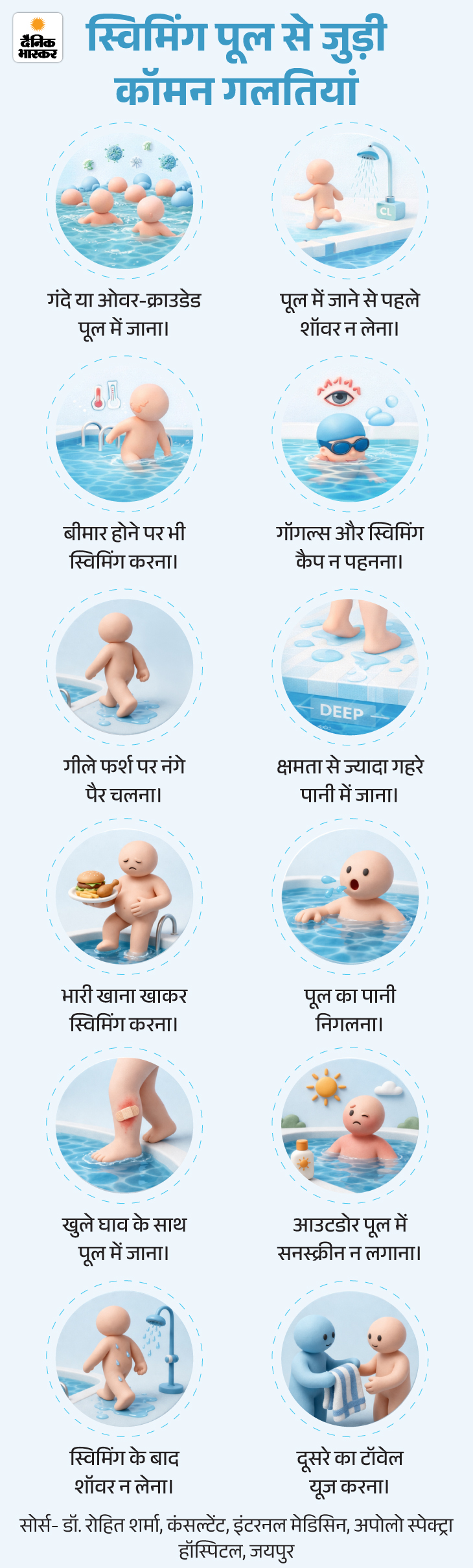
Question- Which common mistakes can harm the eyes while swimming?
answer- While swimming, people make some mistakes while having fun, which can harm the eyes-
- Swimming without protective goggles increases direct eye contact with water.
- Frequent rubbing of eyes increases the risk of micro-injury and infection on the cornea.
- Not washing the eyes with clean water after swimming can also cause harm.
See all the mistakes in graphic-
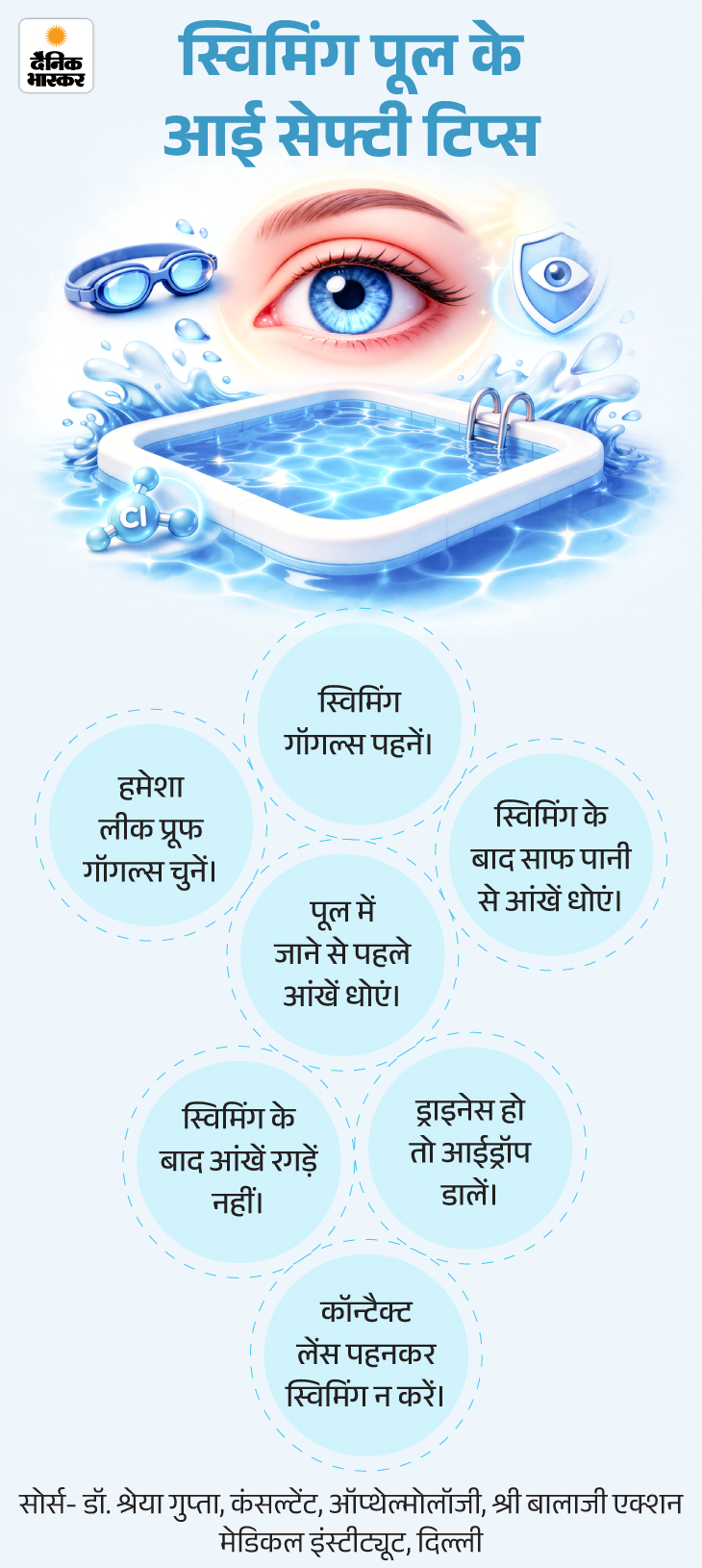
Question- What should be done before swimming, during swimming and after swimming for eye safety?
answer- Understand from the pointers below-
- Wear clean and properly fitting water-tight goggles before swimming.
- Remove eye-makeup or oily cream and swim so that the chemical reaction is reduced.
- Protect eyes from unnecessary water splashes in swimming pools.
- After swimming, wash eyes gently with cool, clean water.
- If necessary, use lubricating eye drops.
- Keep your personal towel to dry your body after bathing.
- If you see crowd or dirt, it is better not to swim.
See all the safety tips in the graphic-
Question- What to do immediately if you feel irritation, blurred vision or swelling in the eyes after swimming?
answer- First of all, wash the eyes with clean, cold water for 5–10 minutes.
- Avoid rubbing or pressing the eyes hard. This may damage the surface.
- Stay away from screens, sunlight and bright lights for some time.
- To provide relief, you can apply a cold compress for 10 minutes.
- If you are wearing contact lenses, remove them immediately and keep them in a clean case.
- Artificial tears drops can reduce dryness and irritation.
- If symptoms persist it is important to seek medical advice.
Question- When is it necessary to see a doctor?
answer- In some situations it is necessary to see a doctor-
- If eye pain persists for more than 24-48 hours.
- Redness or swelling may gradually increase or spread from one eye to the other.
- Sudden loss of vision or persistent blurred vision.
- Yellow/green discharge comes from the eyes or eyelids start sticking.
- Can’t tolerate light and feel headache or nausea.
- White spots or spots appeared on the cornea.
- If you already have a history of allergy, dry eye or eye surgery, get yourself checked immediately.
Question- According to experts, what are the most important eye-care tips for swimmers?
answer- See the pointers below –
- Always use UV-protected, anti-fog swimming goggles.
- Take the decision to swim only after seeing the hygiene and maintenance status of the pool.
- Drink enough water after swimming to protect your eyes from dryness.
- If there is frequent eye irritation, apply prophylactic lubricant drops.
- Keep your personal eye-hygiene kit (towel, eye-drops) separate.
- Keep a record of the symptoms related to swimming, so that the doctor can get the correct information.
- Limit exposure time for children and people with sensitive eyes.
……………… Read this news also Important news- 12 signs of iron deficiency: Do not ignore, anemia, infection may occur, include red leafy greens in the diet.

According to the National Family Health Survey 5 (NFHS-5), about 57-59% of women aged 15-49 years in India have anemia. The main cause of anemia is iron deficiency. Iron is a critical mineral for the body. Read further…

&w=360&resize=360,240&ssl=1 "This one thing will drop in the days and drink in the water, knowing more advantages")
&w=360&resize=360,240&ssl=1 "Save bunker during the war, read people, read here")
&w=360&resize=360,240&ssl=1 "The kitchen will come back, the brightness will come up with inserting this thing in the washing machine.")