

10 hours ago
- copy link
Question- Six months ago a friend of mine committed suicide. I am a second year post graduation student. On the night of suicide he called my mobile several times, but I did not pick up. I was partying in a friend’s room.
He called two more people in our group, but none of us picked up the phone. He often used to call at midnight after drinking alcohol. We thought he was drunk and would then eat his brains. But the next day it was found that he had hanged himself in his room.
Six months have passed since that incident, but I am not able to forget that incident. I am living in a strange guilt. I feel again and again that if I had picked up his phone that night, he would have been alive today. I am unable to sleep many nights. Alcohol has increased a lot. How to get out of this gilt?
Expert – Dr. Dron Sharma, Consultant Psychiatrist, Ireland, UK. Member of the UK, Irish and Gibraltar Medical Councils.
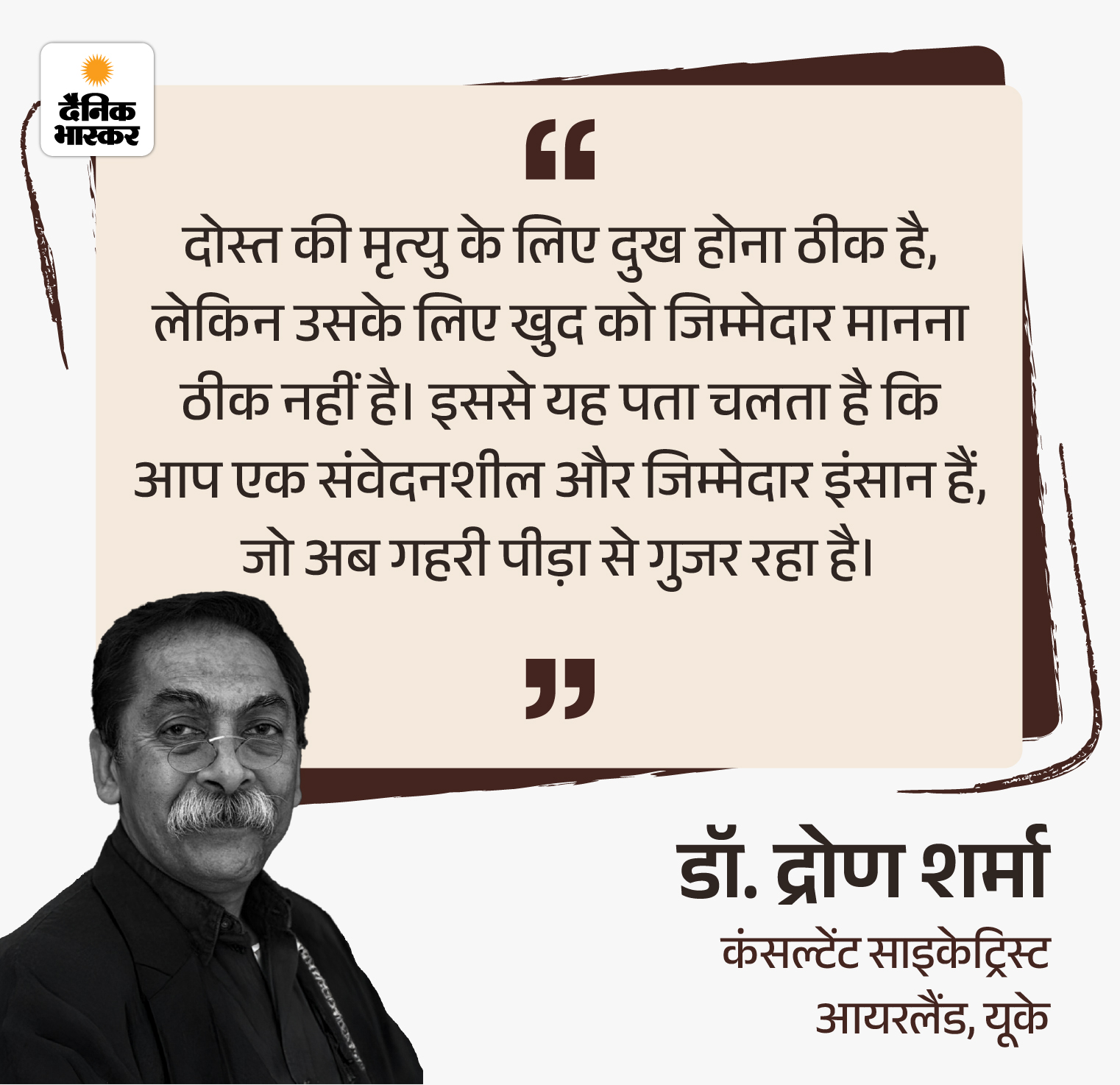
Thank you for asking the question. Your state of mind can be understood. But if I say in just one line, it is not right to blame or hold yourself responsible for the death of a friend. Your guilt is not at all proof that you are responsible for your friend’s death. But this definitely indicates that you are a sensitive and responsible person, who is now going through a deep problem.
I will further try to decode your psychology and give you some tools for self help with self assessment. Before proceeding further, let me tell you that by asking questions you have taken the first step towards helping yourself. This is an act of great courage.
Why doesn’t it just feel ‘sad’?
Grief, memories, and regrets are normal human reactions to the death of a friend. But here are some indications that the matter is not limited to just normal grief.
- Even after six months of the incident, the same incident is replaying in the mind again and again.
- Somewhere inside this thought is stuck: “This happened because of me.”
- This grief is affecting sleep and health. Both are continuously deteriorating.
- Due to this, alcohol consumption has also increased. Drinking has become the main way to cope with one’s suffering.
- This is where it becomes important for us to understand the difference between normal grief and complicated grief.
Grief and its stages
Grief is a natural psychological process that occurs after the death of a loved one. In this, all the emotions like shock, numbness, sadness, anger, guilt, remembrance and yearning are expressed. Going through all this, a person gradually moves towards acceptance. All these steps do not proceed in any fixed order.
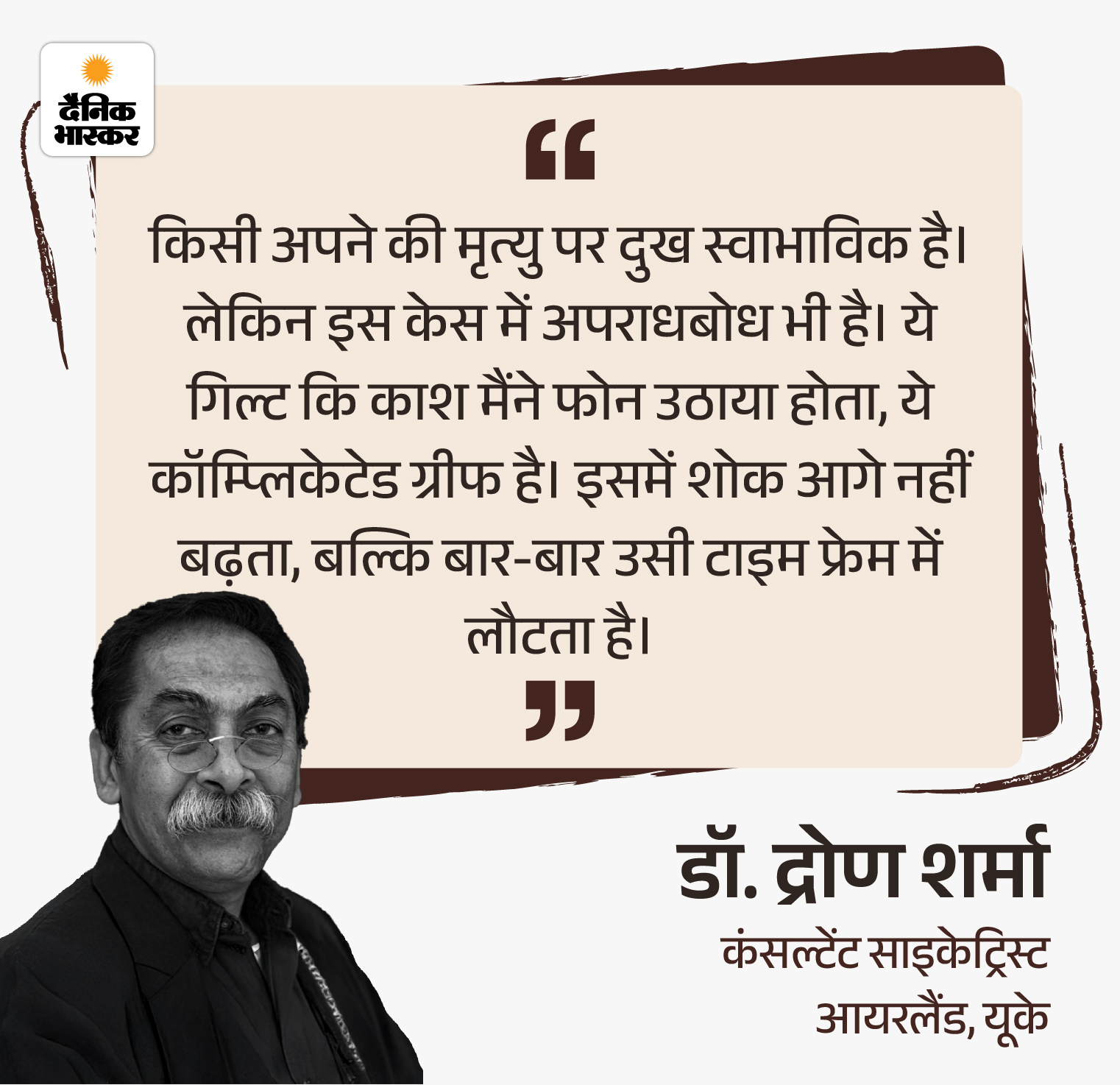
If grief had proceeded normally in this case, there would have been sadness at the memory of the friend even after six months. Sometimes the thought would come, “I wish I had picked up the phone,” but these thoughts would come in waves and then subside. Sleep and studies gradually improve and guilt does not dominate the whole life.
Complicated Grief – Why does the picture look different here?
In this case, there is a sense of guilt associated with grief, especially guilt over something you did not do. The mind is stuck in that one moment: “If I had picked up the phone that day, he would be alive today.”
This is called complicated grief by omission. In this, grief does not move forward, rather the person keeps returning to the same moment again and again.
Even after six months, sleep is poor, health has deteriorated and alcohol consumption has increased. All these are signs that the grief is not healing, but is stuck somewhere.

Alcohol and Complicated Grief – Why is the Risk Higher?
In cases of complicated grief, alcohol often becomes self-medication. Drinking alcohol provides temporary relief from pain, guilt and sleep problems, but this relief does not actually happen. This is a kind of illusion, which further damages physical and mental health. See the graphic below about the risks of alcohol and complicated grief:
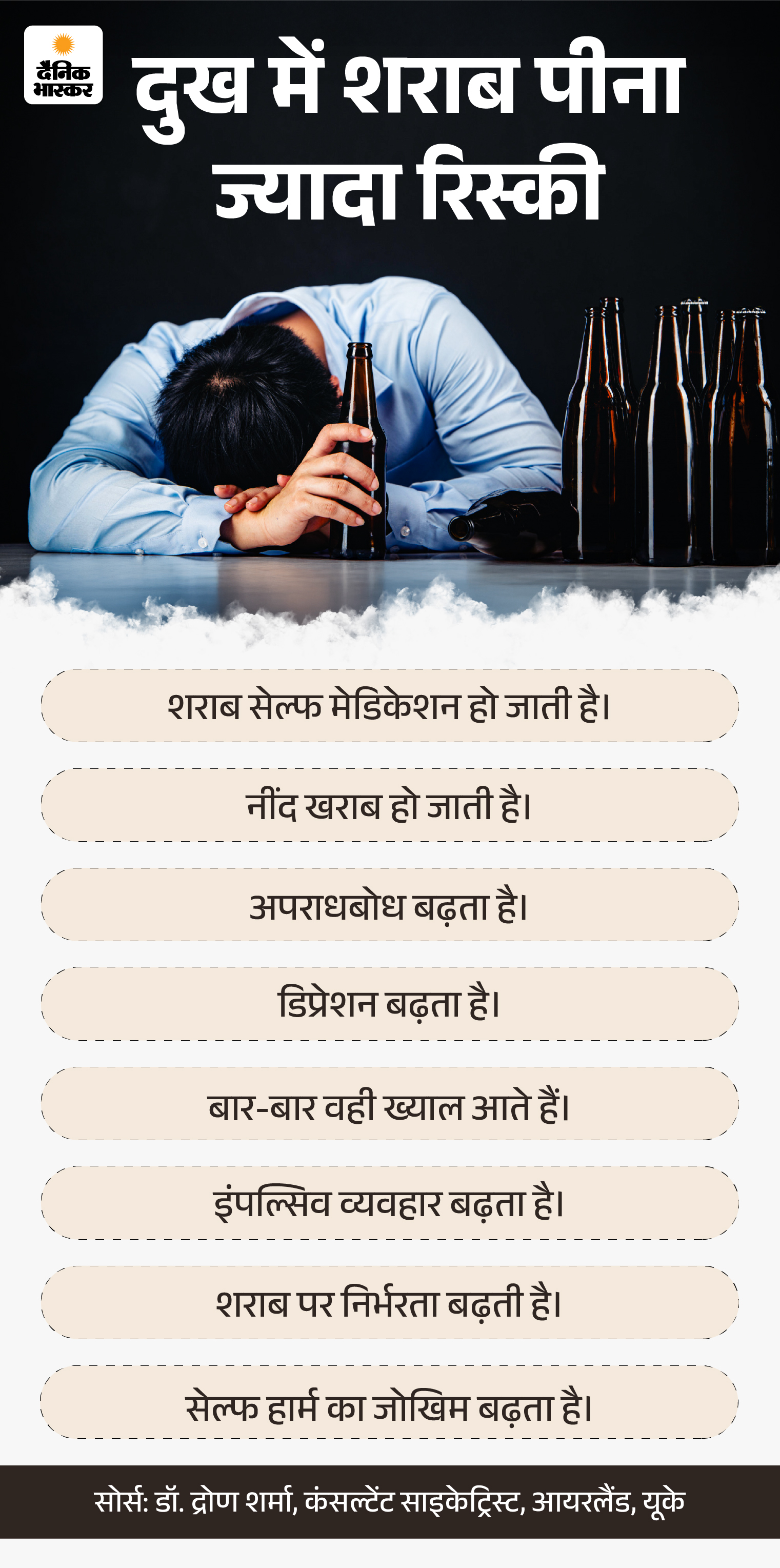
In your case, increased alcohol consumption is a warning sign. This is a sign that the brain is unable to find safe ways to deal with and manage grief and guilt.
CAGE Questionnaire
Is alcohol becoming a problem?
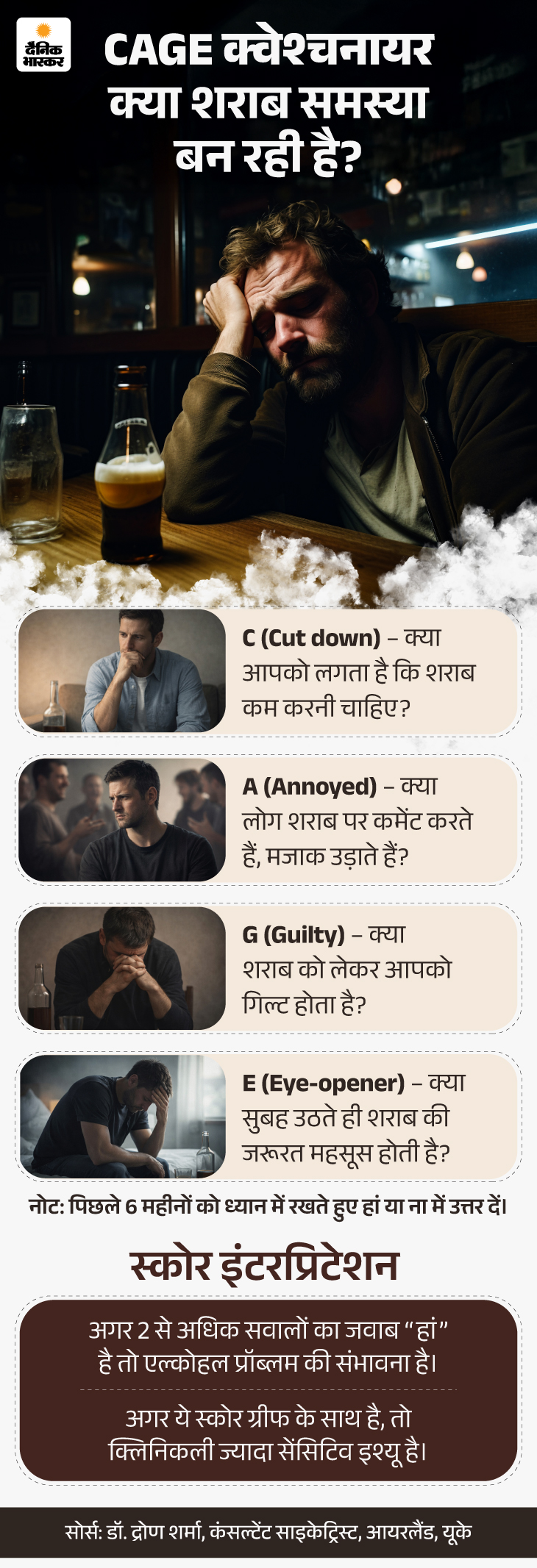
The CAGE Questionnaire is a short, four-question screening tool. Doctors or healthcare providers use it to detect the possibility of alcohol abuse or addiction. The CAGE questionnaire is made up of four words – cut-down, annoyed, guilt and eye-opener. If the answer to one or more of the questions on this questionnaire is “yes,” it means there is a possibility of an alcohol problem. If the answer to more than two questions is “yes”, then there may be a possibility of alcohol abuse.
You answer the questions given in the graphic below and also check your score.
Assess your mental health
self assessment test
Here I am giving you a self assessment test. There are a total of 12 questions in three sections as shown in the graphics below. Section A contains questions related to emotional and cognitive reactions, B contains behavioral and physical reactions and C contains questions related to life and happiness.
You have to read these questions carefully and rate it on a scale of 0 to 3. For example, if your answer to the first question is ‘not at all’ then give 0 marks and if your answer is ‘almost always’ then give 3 marks. Finally analyze your total score.
Its interpretation according to the numbers is also given in the graphic. For example, if your score is between 0 to 15, it means that it is normal grief. But if your score is more than 26 then you may need CBT therapy and professional help.

Where is your problem?
If you psychologically decode the state of mind you are going through, then mainly these four things are visible –
- Hinside Bias: Things will become clearer later.
- Personalization: Take full responsibility for that tragic incident.
- If Only Loop: Endlessly looping through what if this had happened, “If only I had picked up the phone,” “If only this had happened.”
- Alcohol support: Using alcohol to suppress or forget your pain.
When alcohol is used for self-medication or to treat one’s grief, the purpose is not to erase one’s guilt, but to transform it into one’s reality and self-pity.
Four weeks CBT based self-help plan
In this self-help plan, at least the following things have to be done daily:
- Write for 10 minutes.
- 10 minutes of any physical activity.
- To meet and talk to one person.
- Working on a clear focused plan regarding alcohol.
week 1
(Sleep+Alcohol+Emotional Loop)
emotional loop timebox
- Don’t think about it for more than 15 minutes a day.
- If a thought comes, you have to try to remove it.
- Have to engage yourself in some other work. You have to divert your attention from there.
sleep first
- Have dinner 2 hours before sleeping.
- Do not watch screens 1 hour before sleeping.
- Remember, alcohol is not a “sleeping drug”.
alcohol plan
- Do not drink alcohol at least 2 days a week.
- On other days the quantity of alcohol has to be reduced by 30–40%.
- Drinking alcohol alone is to be avoided.
week 2
(guilt+alcohol triggers)
● Reframing your thoughts
“I wish I had answered the phone, but at that time I had no idea about his intention to commit suicide.”
● Mapping Alcohol Triggers
- When do you feel like drinking alcohol? (At night, when alone, when there is a guilt spike)
- Thinking of an alternative action for that time (take a walk, call a friend, take a shower, listen to music)
week 3
(Exposure+Meaningful Repair)
- You missed the help in one place.
- Helping someone else somewhere instead.
- Be conscious about your mental health.
- Limiting alcohol to social drinking only.
- Even if you feel guilty, don’t drink, do some alternative activity. Like writing a diary or taking a walk.
week 4
(Relapse Prevention)
- Making a list of warning signs in situations that increase the chances of getting stuck in a loop or turning to alcohol.
- Return to your rescue plan as soon as you see any warning signs or feel a trigger. That means writing a diary, taking a walk, talking to a friend, listening to music.
- Reminding yourself- “I am not guilty, I am human. I will not live by suppressing the pain, but by understanding it.”
one last important thing
I had said this even at the very beginning of the article. I am repeating again that your guilt is not proof that you killed someone. This is a sign that you are a sensitive and responsible person. You feel connected to others, you care about them. Because you care, you are feeling so much pain. Recovering from complicated grief does not mean forgetting the sorrow of a friend’s departure. This means keeping the pain in a place where it doesn’t control both your life and your alcohol.
…………… Also read this news Mental Health – There was no love for my father: He was an alcoholic and abusive, stayed away from him for 34 years, then why is there so much pain in his death
Feeling deep grief for a violent and abusive father can also cause some confusion. As long as he was alive, there was no connection with him. And now when he is no more, I think of him, miss him and also feel deep sadness. This contradiction can be disturbing for the mind. Read further…
&w=360&resize=360,240&ssl=1 "If these 4 symptoms are seen in a 5-year-old child… then understand that the risk of diabetes is increasing! Learn how to survive")

&w=360&resize=360,240&ssl=1 "The entire film shoted in a train that is full of innumerable murder, the process of action, this film")