

7 hours agoAuthor: Gaurav Tiwari
- copy link
According to the Asian Institute of Nephrology and Urology (AINU), cases of kidney stones increase in summer. The risk of dehydration increases as the temperature increases in summer. Due to this, crystals of calcium and other minerals get deposited in the kidneys and turn into stones.
According to the report of ‘National Center for Biotechnology Information’, more than 12% people in India have the problem of kidney stones.
so ‘Physical Health’ Today I will talk about kidney stones. You will also learn that-
- Why does the risk of kidney stones increase in summer?
- What to do to avoid this?
Question- Does the risk of kidney stones increase in summer?
answer- Yes, the risk of kidney stones may increase in summer. Understand from pointers-
- In summer, more water is released from the body through sweat. Not drinking enough can lead to dehydration.
- Due to lack of water in the body, minerals like calcium and oxalate increase in urine. These minerals together form small crystals, which turn into kidney stones.
Question- When does kidney stone form and what is its relation with weather?
answer- Due to increase in calcium, oxalate and uric acid in urine, crystals are formed, which do not come out due to lack of water and become stones. There is no direct relationship with the season, but the risk increases as dehydration increases in summer.
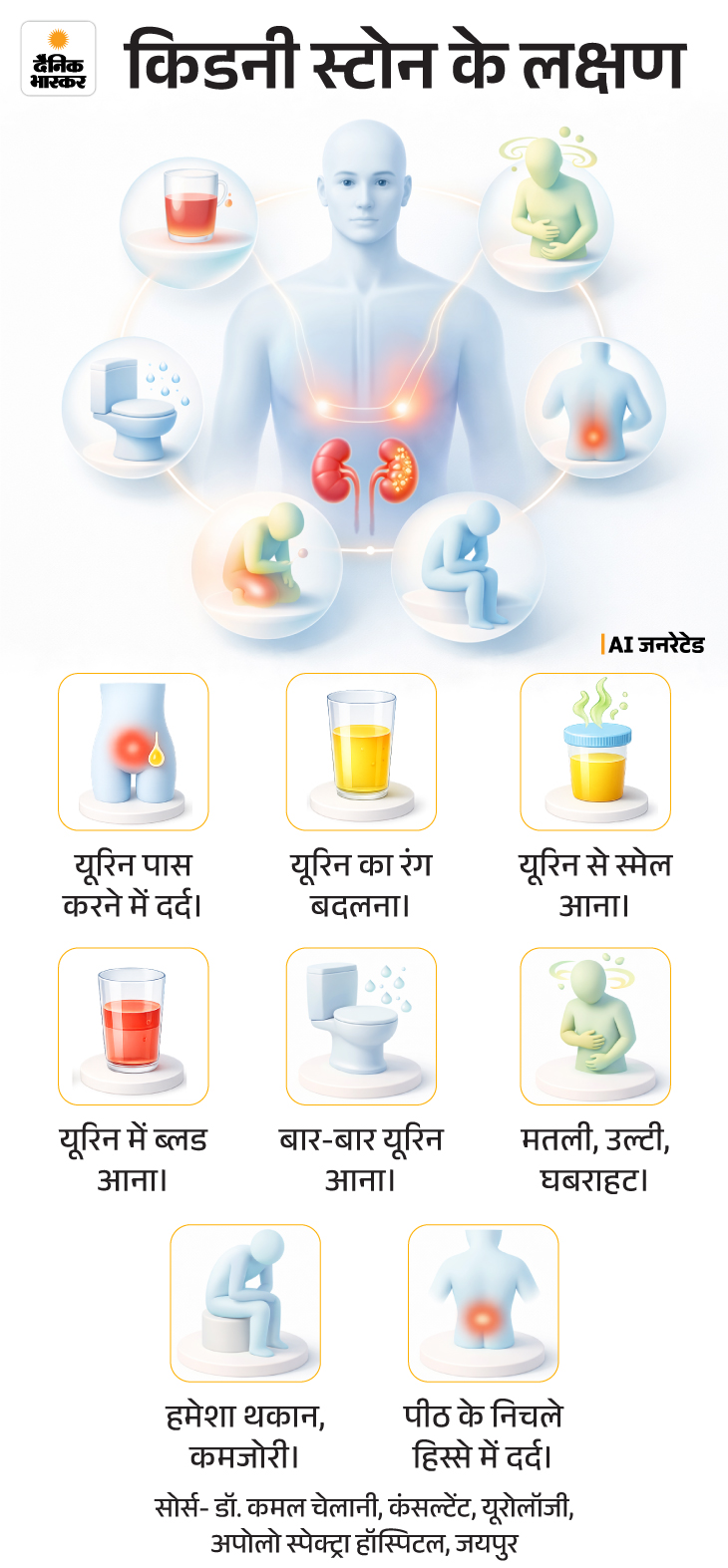
Question: What are the symptoms of kidney stone?
answer- Kidney stones cause problems related to urination. This may cause severe pain in the waist or stomach. See all its symptoms in graphic-
Question- Which carelessness increases the risk of kidney stones in summer?
answer- Small lifestyle mistakes in summer increase the risk of kidney stones. Ignoring the need for water leads to ‘mineral saturation’ in the kidneys. See the carelessness in the graphic-

Question- Does the risk of kidney stones increase in everyone or is it more in some people?
answer- Some people are at higher risk. Who is at greater risk, see the graphic-

Question- Can food habits and lifestyle increase or reduce the risk of kidney stones?
answer- Yes, unhealthy lifestyle increases the risk of kidney stones, while healthy habits reduce it.
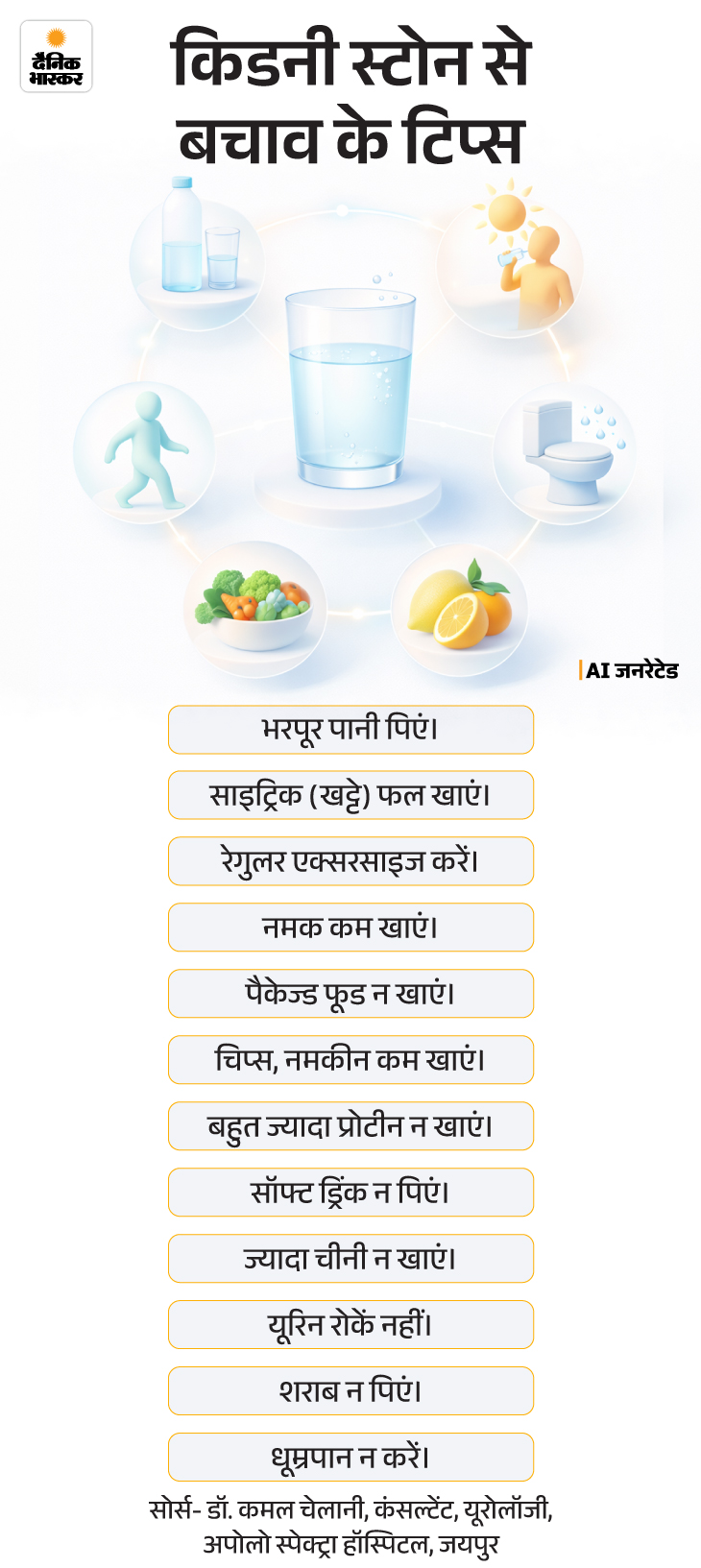
- Do not take too much salt, processed food and high protein diet.
- Do not drink too much tea, coffee or soft drinks.
- Take a diet rich in fruits, vegetables and fiber.
- Take regular physical activity and a balanced diet.
- Drink at least 8-10 glasses of water throughout the day.
Question- How much water is necessary daily to avoid kidney stones in summer?
answer- The need for water increases due to excessive sweating in summer. Generally 2.5-3 liters of water should be drunk daily. If you are sweating excessively or working outdoors, increase the amount of water. Light yellow color of urine indicates adequate water intake, while dark color means that more water is needed.
Question- Is it enough to drink only water or are electrolytes also necessary?
answer- Balance of electrolytes (sodium, potassium) with water is important. These minerals are removed through sweat. Water provides hydration, while electrolytes maintain balance. Coconut water, buttermilk and lemonade are good sources of these, which maintain fluid balance.
Question- What should be the diet for kidneys in summer?
answer- To keep kidneys healthy in summer, a light, balanced and hydrating diet should be taken.
- What should we eat- Watermelon, cantaloupe, cucumber, orange, sweet lime, curd and whole grains.
- What not to eat- Excess salt, junk food, processed food, red meat, excess sweets and fried foods.
Question- What to do to reduce the risk of kidney stones?
answer- Some foods and drinks can increase the risk of kidney stones, so avoid them. Apart from this, it is necessary to make some changes in lifestyle also. See graphic for tips to prevent kidney stones:
Question- What precautions should be taken in summer if there is a history of kidney stones?
answer- People who have had stones before have a higher risk of their formation again. Take care like this-
- Keep taking enough water and liquid diet throughout the day.
- Avoid taking too much salt and high protein diet.
- Keep taking medicines as per doctor’s advice.
- Do not hold urine for a long time.
- If you notice weakness, pain or problems related to urination, consult a doctor immediately.
Question: What to do if you have kidney stones and when to consult a doctor?
answer- Timely treatment is important for kidney stones. Small stones can be passed with water, while pain medications are given and tests are done when necessary. Consult a doctor immediately in these symptoms-
- Severe pain in waist or stomach.
- Blood in urine.
- Frequent vomiting or nausea.
- Severe pain during urination.
- Less or no urine output.
……………… Read this news also Physical Health- Sweating also tells about the health condition: Know which health condition is indicated by the sweating pattern, when is it necessary to see a doctor.

Sweating is common in summer. But have you ever felt that even though the temperature is normal, you are still sweating? There is a strange smell coming from sweat. If yes, then it is not common. This could mean that our body is pointing towards some health condition. Read further…

&w=360&resize=360,240&ssl=1 "Get to save yourself from the China Door, however, that the measure can escape with the correct techniques")
&w=360&resize=360,240&ssl=1 "Does your insurance policy cover terrorist attacks? Understand the whole funda..")