

- Hindi News
- Lifestyle
- Toilet Seat Vs Home Office Germs; Bacterial Disease | Healthy Hygiene Habits
3 hours agoAuthor: Aditi Ojha
- copy link
Home Which is the dirtiest place? On hearing this question, the first thought that comes to mind is toilet seat. Perhaps this is the reason why we are most cautious about its cleanliness. But wait a moment. Think, are the things that we hold in our hands several times a day, touch while eating or drinking or bring them directly near our face, really as clean as we believe? The truth is that these everyday things can sometimes be dirtier than the toilet seat.
Many studies show that surfaces like kitchen sponges, mobile phones, TV remotes, keyboards can have hundreds of thousands of times more bacteria than toilet seats.
So today needed news I will know that-
What are those places in the house where there can be more bacteria than a toilet seat?
The risk of which diseases increases due to the germs present on them?
What are those healthy hygiene habits that we must follow?
Expert: Dr. Rohit Sharma, Consultant, Internal Medicine, Apollo Spectra Hospital, Jaipur
Dr. Sheetal Verma, Professor, Clinical Microbiology, King George Medical University, Lucknow
Question – Which are those places or things where there can be more bacteria than the toilet seat, but we do not know about it?
answer- According to studies, there are many common items used in home and office on which more bacteria are found than the toilet seat. The reason for this is that these things come in our hands again and again, but we never clean them. Understand from graphic-
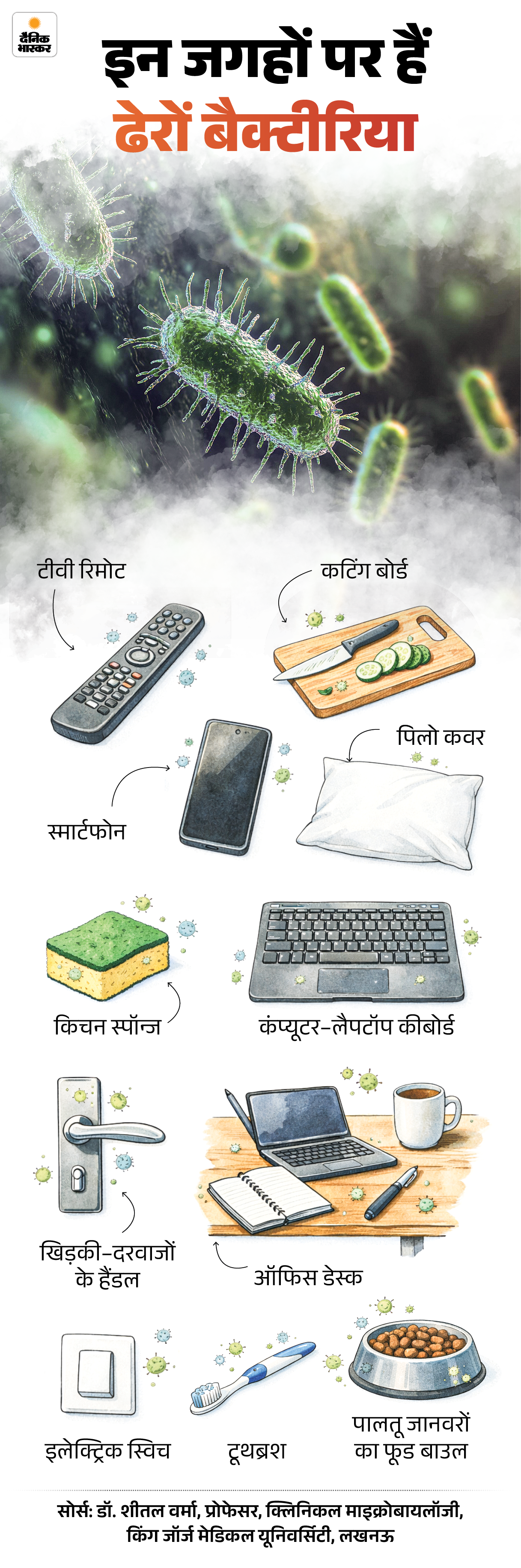
Now let us understand them one by one in some detail.
TV remote
We often eat and drink while watching TV and at the same time the remote is also in our hands. But hardly anyone thinks of cleaning the remote. A survey by Churchill Insurance, a UK company, found that a TV remote can be about 15 times dirtier than a toilet seat.
cutting board
Cutting boards are used in the kitchen to cut vegetables, fruits and raw meat. According to a study by the University of Arizona, on average, a cutting board can contain 200 times more fecal bacteria than a toilet seat, which can cause food poisoning.
smart fone
The mobile phone remains in our hands throughout the day. Many people also use it in toilet. Study on washroom hygiene: According to a 2018 study by survey company Initial Washroom, mobile phones can be about 7 times dirtier than toilet seats. Using the phone in the toilet transfers bacteria directly to the screen and cover.
pillow cover
While sleeping, sweat, saliva and dead skin cells keep accumulating on the pillow cover. If they are not washed regularly, they can become home to bacteria and fungus.
kitchen sponge
Kitchen sponge is counted among the dirtiest household items. Research shows that a kitchen sponge can contain dangerous bacteria like E. coli and Salmonella. On average, up to 45 billion microbes per square centimeter of bacteria have been found in a kitchen sponge, which is thousands of times more than a toilet seat.
keyboard
Food particles, dust and germs from hands also keep accumulating on the keyboard. Therefore, there can be up to 200 times more bacteria there than on the toilet seat.
door handles and switches
Many people touch door handles, tap handles, electric switches and lift buttons throughout the day. These are not cleaned. Therefore, there can be a lot of germs on these surfaces also.
office desk
Many studies show that on average an office desk can be 100 times dirtier than a kitchen table and 400 times less hygienic than a toilet seat.
toothbrush
Toothbrushes can also contain bacteria. According to research, a toothbrush can contain up to 2 lakh bacteria. Therefore, it is very important to change the toothbrush from time to time.
pet food bowl
According to research, if a dog licks a toilet seat, it gets approximately 296 bacteria per square inch. But more than 2,000 bacteria per square inch have been found in his eating utensils.
Question- Which diseases can increase the risk of things and surfaces containing these bacteria?
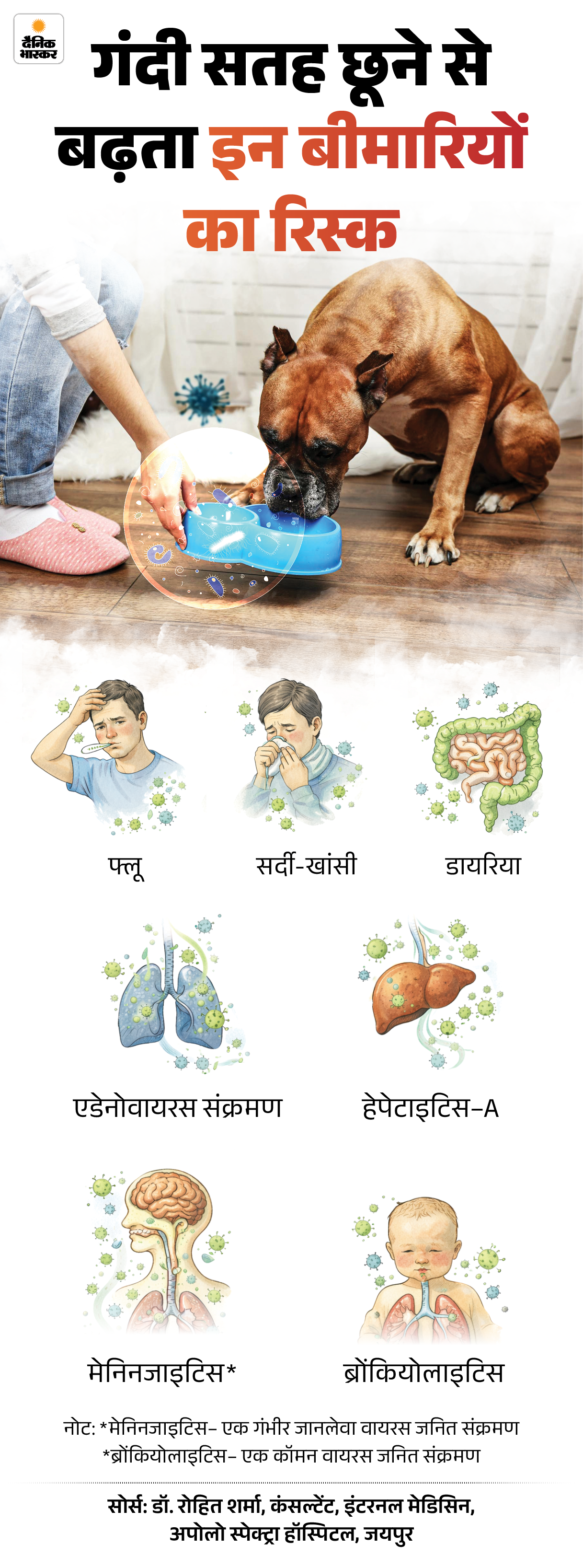
answer- Bacteria and viruses present on these surfaces can enter the body and spread many types of infections. Especially if we do not clean hands properly after touching these surfaces, eat food directly or touch eyes, nose, mouth with dirty hands.
Question: Which people are more at risk of bacterial infection?
answer- See the pointers below –
- small children
- elderly
- people with weak immunity
- pregnant women
- People sharing things in the office
- people in contact with pets
Question – How often and how should the things listed above be cleaned?
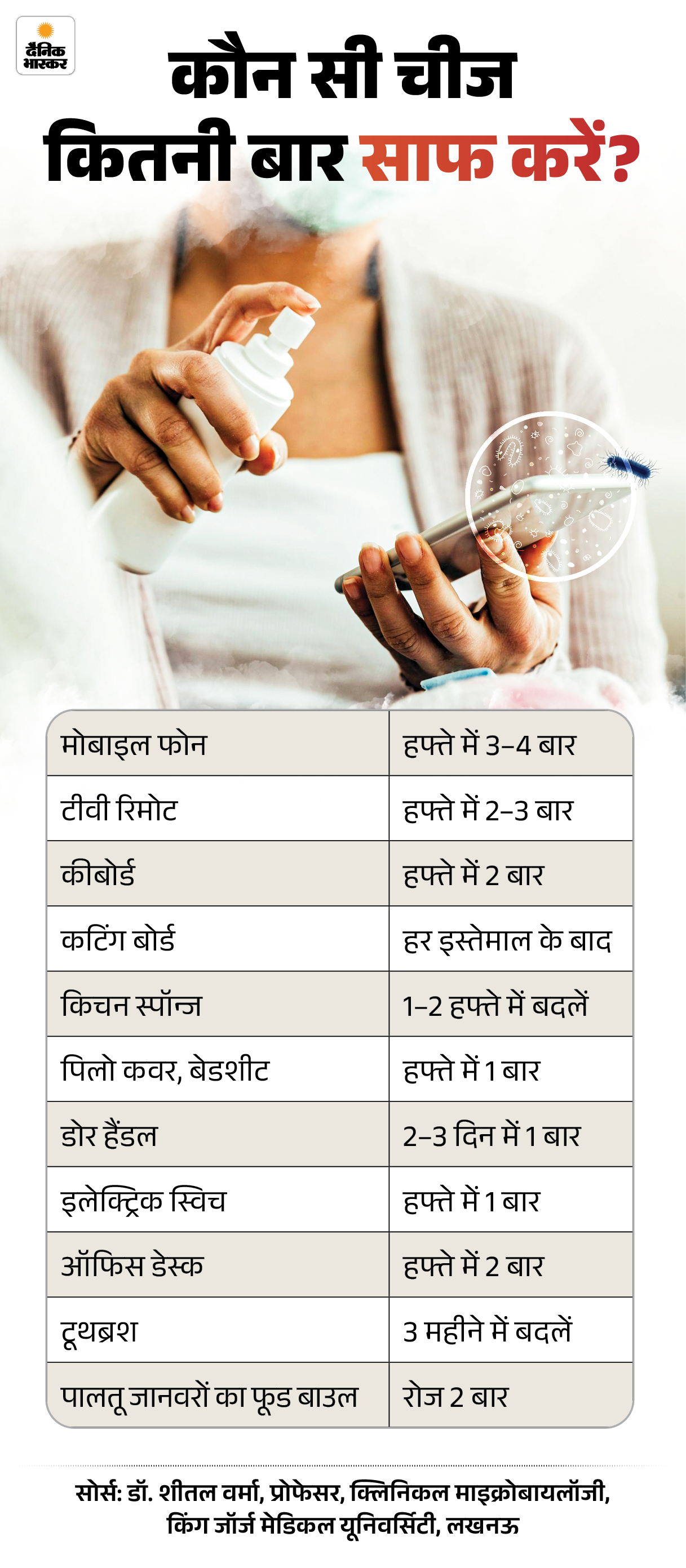
answer- Those things at home and office, which we touch several times a day, spread the most bacteria. Let us know when and how they should be cleaned.
mobile phone
Clean the mobile phone at least 3–4 times a week with an alcohol-based wipe or microfiber cloth.
TV remote
It is important to clean the TV remote with a disinfectant wipe 2–3 times a week. Use a dry cloth or earbud to remove dirt stuck between the buttons.
cutting board
Wash cutting boards thoroughly with hot water and dishwasher liquid after each use. Keeping separate boards for raw meat and vegetables reduces the risk of food infection.
kitchen sponge
Make a habit of changing the kitchen sponge every 1–2 weeks. It is important to squeeze and dry the sponge after daily use, because bacteria grow rapidly in moisture.
keyboard
Clean the keyboard at least twice a week. Dust first, then wipe buttons and surfaces with an alcohol wipe, especially when used by multiple people.
pillow cover
Wash pillow covers at least once a week.
Door Handle and Light Switch
Clean door handles and electric switches with disinfectant wipes every 2–3 days.
office desk
It is important to keep the office desk clean regularly. Disinfect surfaces at least twice a week.
toothbrush
Keep the toothbrush in the right place and change it every 3-4 months. Bacteria grow quickly in toothbrushes kept in wet places.
pet food bowl
Wash pet’s food dishes in hot water daily.
Question- What are the 10 healthy hygiene habits of daily life, which everyone must follow?
answer- Read the points written in the graphic below and include these habits in your everyday life.
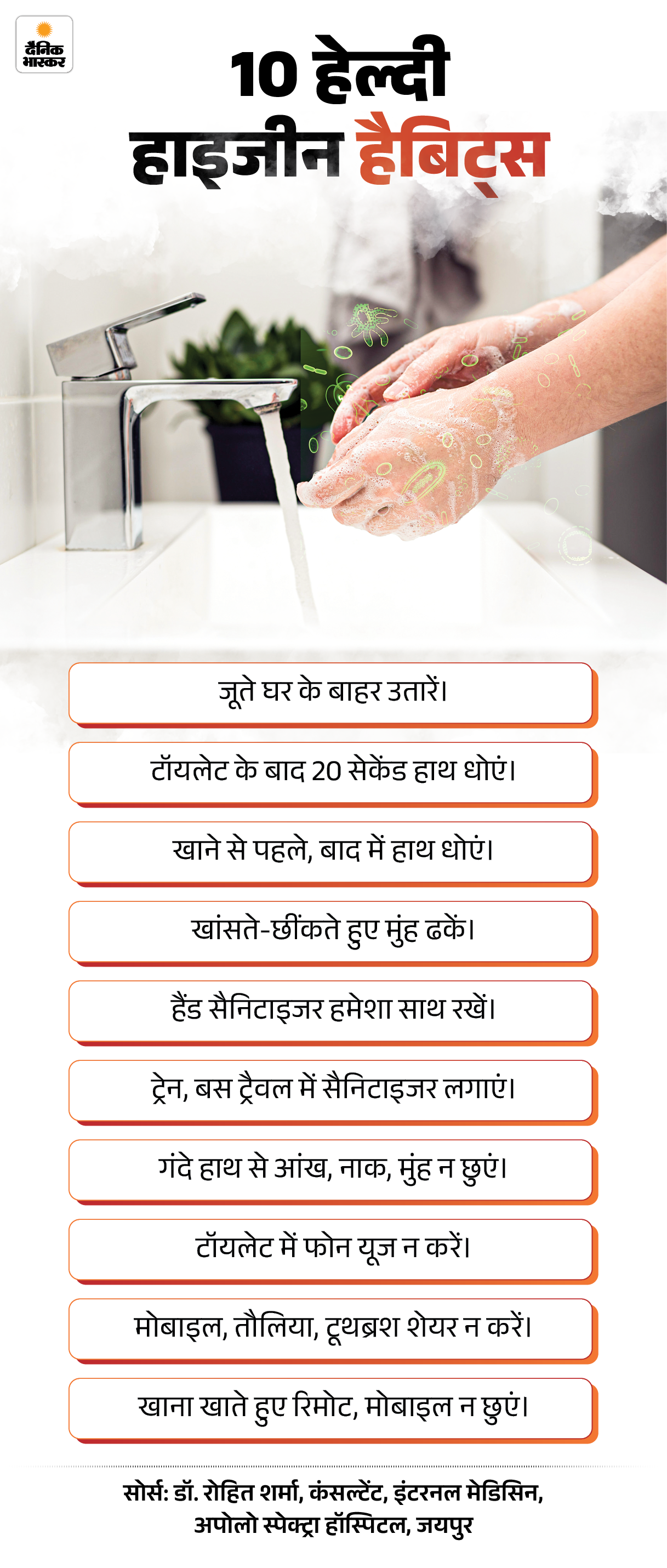
By adopting these seemingly simple, but very important precautions in everyday life, we can keep ourselves and our families healthy.
…………………..
Read this news also…
23 lakh microplastics come out from one scratch: Every year lakhs of people are falling ill due to scratched non-stick pan.
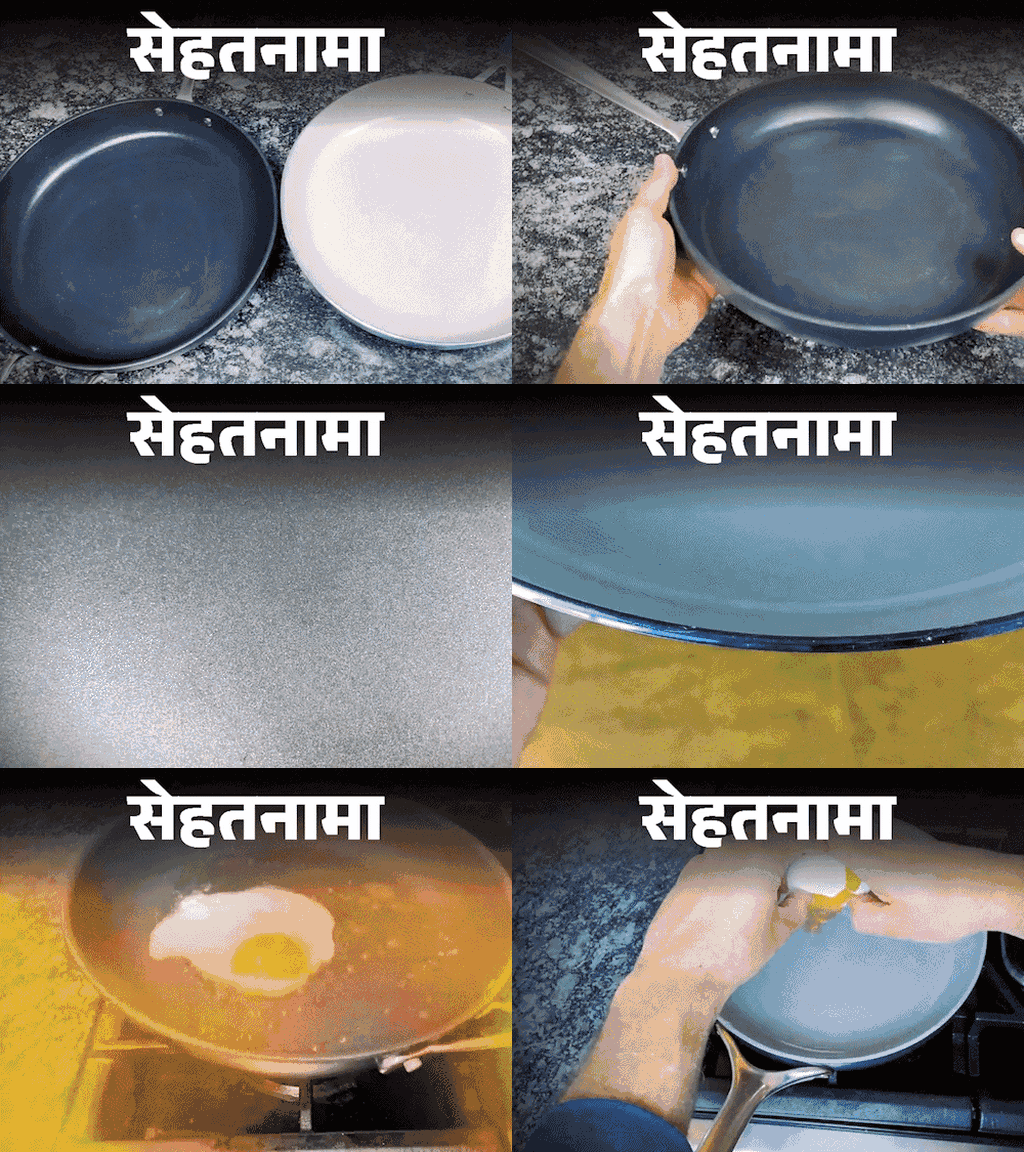
You must be using non-stick pan in your home. There might have been scratches while washing it. Despite this you are using it. If this is true then this study is for you only. Read the full news…
&w=360&resize=360,240&ssl=1 "Adapt to upset from boss it will be 3 psychological tricks, stress below")
&w=360&resize=360,240&ssl=1 "Now on the post office will be by the UPI and QR code, start the new feature – News-Patiala English")
