

9 hours agoAuthor: Gaurav Tiwari
- copy link
World Most of the people’s salary is spent within 10 days of it coming into the account. House rent, EMI, children’s fees, ration, electricity-water and transport expenses. Every month there is only one question, how to save? Many people consider it a compulsion of their low income, whereas the real problem is not low income but lack of planning.
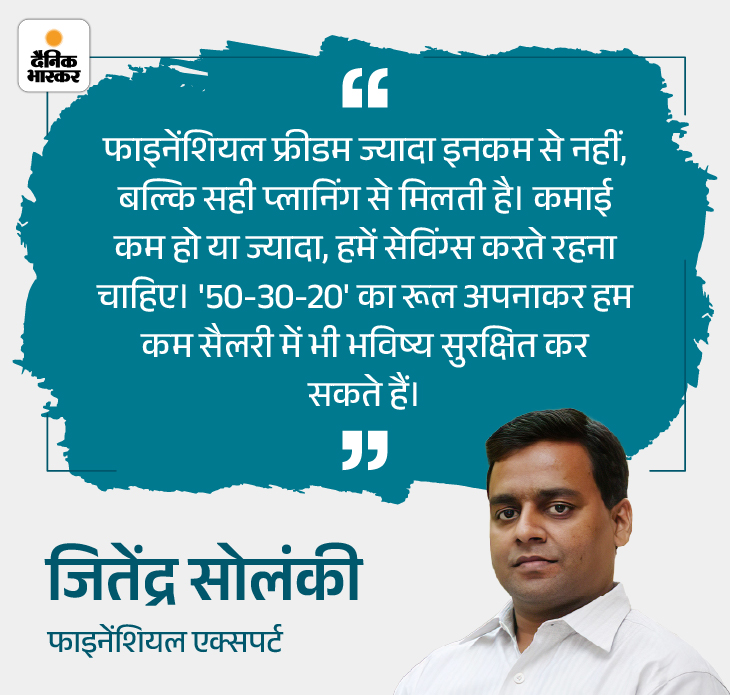
Financial experts believe that whether the income is low or high, if the expenditure structure is not fixed, then you will never be able to save. For this, financial expert Jitendra Solanki suggests the rule of 50-30-20. This is not a strict rule. This is a way by which you can already direct your money in the right direction.
so today ‘your moneyIn this column we will know whether savings can be done with low salary. You will also learn that-
- What is the 50-30-20 rule?
- When, how and where is it right to invest?
Question- What is the 50-30-20 rule of saving?
answer- The 50-30-20 rule means that you should divide your income into 3 parts.
50%- Needs- Expenses which cannot be avoided.
- house rent or home loan
- children’s school fees
- ration, milk, vegetables
- electricity, water, gas
- office commuting expenses
- Necessary insurance and EMI
30%- Wants- Expenses that make life easier or fun, but are not necessary.
- eat in restaurant
- shopping online
- OTT subscription
- To roam around
- expensive gadgets
20%- Saving and Investment- This part is to secure your future.
- SIP
- RD
- PPF
- emergency fund
The purpose of this rule is not that this percentage has to be followed in every situation. The purpose here is to explain that before the salary comes, it should be decided how much money is to be spent and where. If you can save more money then invest more money, but invest at least 20% of your income.
Question- How to save in low salary?
answer- This is the biggest misconception that saving is not possible with a low salary. People keep waiting for salary to increase for savings and with it their expenses also keep increasing. That’s why the day when the salary is worth saving never comes.
Saving always starts with a small amount. If your income is limited then-
- Start with Rs 500 per month.
- Then keep aside Rs 1000 every month.
- By doing this, keep increasing the amount of savings.
It is not necessary to save 20% from the very first salary. The first goal should be to save something every month. Income increases with time, but if proper planning is not a habit, then expenses also increase at the same pace.
Question- Does the 50-30-20 rule apply to every income group?
answer- This rule is for everyone, but is flexible.
If the income is less then-
- The share of needs can be up to 60-70%, in such a situation, start saving with 5-10% instead of 20%.
- If you have a family and a lot of responsibilities, then keep the budget of wants limited. Give priority to needs and savings first.
If the income is good then-
- Instead of increasing the budget of desires, increase savings and investment.
- Remember that the percentage can be changed as per convenience in planning, but the habit of saving should not change.
Question- What to do if there is nothing left after paying rent, EMI and meeting the needs?
answer- This condition is very common in family budget. This does not mean that saving is not possible. This means that expenses are being incurred without planning.
First of all do this-
- Write down all the expenses for a month.
- See which expenses are fixed and cannot be stopped.
- Which expenses can be stopped?
- Expenses incurred on your hobbies can be easily controlled.
Often small expenses like going out to eat at restaurants, subscriptions to unnecessary apps, unplanned shopping eat up your savings.

Question- Is it necessary to follow the 50-30-20 rule completely?
answer- This rule is just a guideline. If the fees of children in your house are high, there are any medical expenses going on or you have taken a new loan, then your savings may reduce for some time.
But as soon as the expenses reduce, it is important to put that amount in savings. This is called financial discipline.
Question- If credit card bills are due and loan EMI is going on then how to save?
answer- If credit card bills are due and loan EMI is going on, savings can still be done. First of all, focus on repaying the credit card dues, because the interest on it is high. Consider EMI as an essential expense every month and pay it on time.
Start saving with a small amount, like 5-10% or Rs 1000-2000. Reduce hobby expenses and do not make new purchases with credit cards. If there is any extra income, first use it to repay the loan. Once debt comes under control, savings can be increased gradually.
Question- Which investment options are considered best for saving 20%?
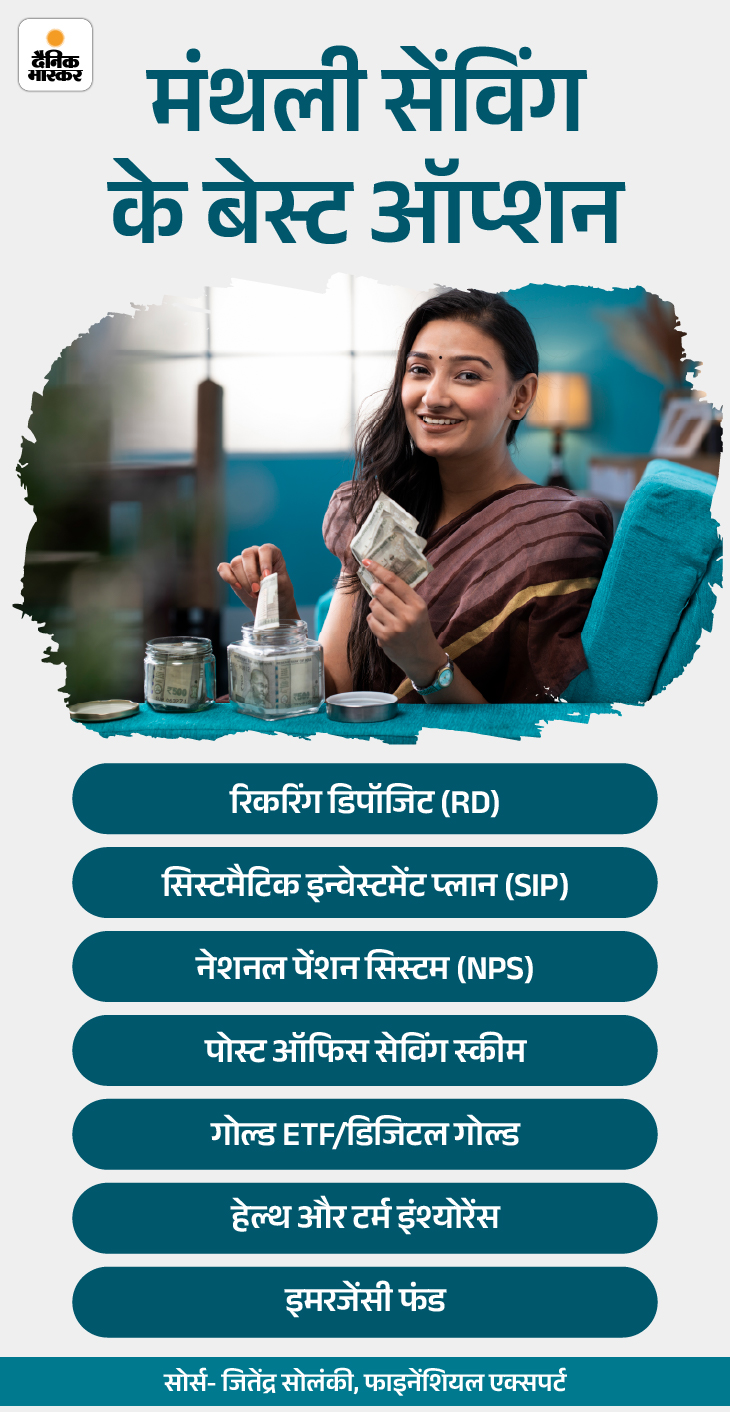
answer- 20% saving can be wisely divided into three parts-
emergency fund
- Save an amount equal to 3 to 6 months’ expenses or salary.
- Keep this money in a savings account or liquid fund, so that it can be availed immediately when needed.
short term goals
- RD or Fixed Deposit (FD) is perfect for mobile, bike, travel or small goals.
- There is less risk in these.
long term investment
- SIP, Mutual Fund, PPF and NPS are considered better options for the future.
- These provide both good returns and tax saving benefits in the long run.
Question- Should budget planning be started from the very beginning of the job?
answer- Yes, budget planning is very important from the very beginning of the job. The sooner you learn to handle money properly, the sooner financial stability comes. Keep track of your expenses from your first salary and develop the habit of saving. This prevents excessive dependence on loans and credit cards in the future.
Question- Does this rule also apply to couples and family budget?
answer- Yes, this rule applies to both couples and families.
- Make a budget by keeping both your income and expenses together.
- Make savings and investment plans together.
- Be sure to include expenses like children’s education, treatment and insurance in the family budget.
- This reduces stress and fights over money.
………………
Read this news also
Your Money- Want to sell the gold kept at home: The price is decided by these 3 factors, do these 6 things before selling, keep these things in mind

Currently, gold prices in India are at record high levels. Many people are seeing this as a big opportunity that they can earn good profits by selling the jewelery or gold kept at home. This money can be invested more practically by taking advantage of the increased prices of gold. Read further…
&w=360&resize=360,240&ssl=1 "It grows rapidly with eating 5 things so fast to diabetes, diabetes patients, be careful, be careful")
&w=360&resize=360,240&ssl=1 "Do you feel after lunch! This easy measure immediately refreshes, read healthy tips")
&w=360&resize=360,240&ssl=1 "The report is the most infidelity of India in this city")